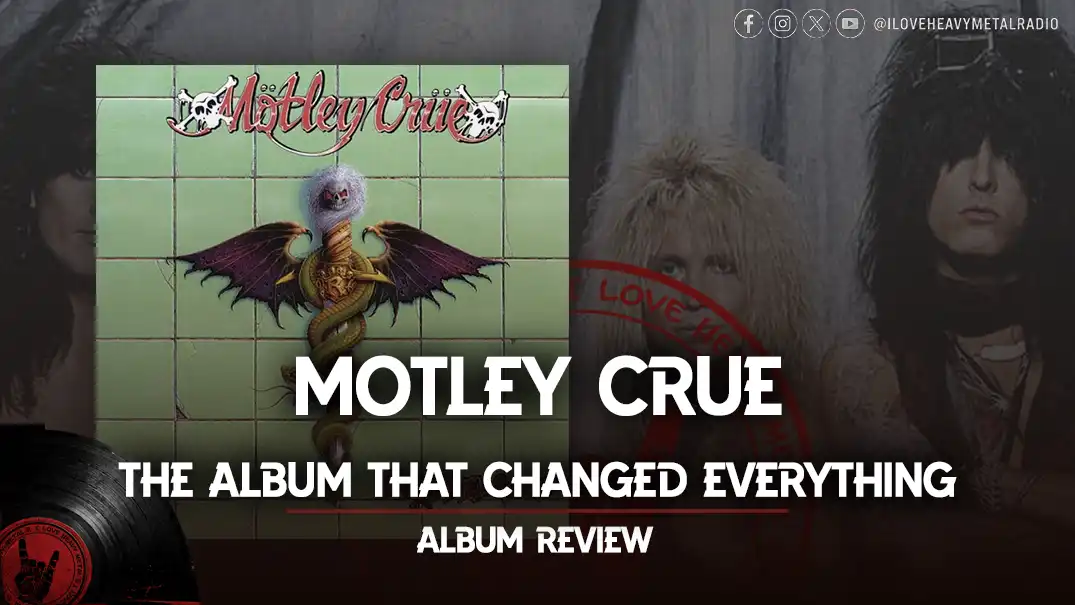

Mötley Crüe had already survived the excesses of the 1980s.
Then they made “Dr. Feelgood”.
Released on September 1st 1989, the band fifth studio album became a career-defining moment and the only Mötley Crüe album to reach No. 1 on the Billboard 200.
But the biggest change wasn’t on the charts.
For the first time, the band was making an album after getting sober and going through rehabilitation. The partying hadn’t exactly made Mötley Crüe known for discipline, so the idea of the four members showing up focused and clean was almost as surprising as the music itself.
And somehow, it worked.
Bob Rock Makes the Crüe Sound Huge
Behind the mixing desk was producer Bob Rock, who gave “Dr. Feelgood” a massive, muscular and remarkably clear sound.
The guitars hit hard. The drums punch through. The bass has weight. And underneath all that muscle are hooks big enough for radio.
The result was a record that managed to sound polished without completely sanding away Mötley Crüe dirty hard-rock attitude.
But there was a problem.

The band itself.
Mötley Crüe weren’t exactly famous for peaceful group therapy sessions.
Bob Rock reportedly decided that the safest way to make the album was to keep the members apart while they recorded.
Tommy Lee and Nikki Sixx worked in Vancouver, while Mick Mars and Vince Neil recorded in Los Angeles.
It sounds ridiculous. It also worked.
Instead of four guys in one room trying to kill each other, Rock could concentrate on getting the best performances from each member.
The result was one of the tightest albums of the band career.
“Dr. Feelgood” Brings the Swagger
The title track opens the album world with a slow, dirty groove and massive distortion.
It’s heavy without needing to race.
Mick Mars delivers a blistering guitar solo, while Vince Neil vocals sit perfectly over the band swaggering rhythm.
The title itself wasn’t completely fictional, either. “Dr. Feelgood” was inspired by a real drug dealer who operated around Hollywood infamous Sunset Strip.
In true Mötley Crüe fashion, even the album title came with a dark story attached.
“Kickstart My Heart” Has an Even Crazier Story
Then comes the song that sounds like pure adrenaline:
“Kickstart My Heart”.
The track was inspired by one of the darkest moments in Nikki Sixx life.
In 1987, Sixx suffered a heroin overdose and was clinically dead before being revived by a paramedic.
That experience became the inspiration for one of Mötley Crüe most famous songs. And you can hear the story in the music.
The song races forward with relentless energy while Mick Mars throws in those instantly recognizable dive-bomb guitar effects.
It’s loud, It’s fast, It’s completely insane.
And somehow, it’s incredibly catchy.

The Album Has More Than Two Big Hits
One reason “Dr. Feelgood” remains so strong is that it isn’t simply an album built around two famous singles.
“Don’t Go Away Mad (Just Go Away)” brings a more melodic side of the band, while “Same Ol’ Situation (S.O.S.)” combines polished hooks with the band hard-rock attitude.
And there’s a bizarre little piece of movie history hiding inside “Don’t Go Away Mad”.
The famous phrase was taken directly from dialogue in Clint Eastwood 1986 movie Heartbreak Ridge.
So yes, even one of Mötley Crüe most memorable song titles has a story behind it.
Look Who Showed Up in the Studio
“Dr. Feelgood” also had some serious friends dropping by.
Steven Tyler of Aerosmith contributed backing vocals to “Sticky Sweet” and provides the brief introduction to “Slice of Your Pie”.
Bryan Adams also contributed backing vocals to “Sticky Sweet”.
Members of Skid Row, including Sebastian Bach, supplied background vocals on “Time for Change”.

And Robin Zander of Cheap Trick added backing vocals to “She Goes Down”.
That’s a ridiculous amount of rock royalty for one album.
“Time for Change” Goes Somewhere Unexpected
After all the swagger, distortion and chaos “Dr. Feelgood” closes with “Time for Change”.
The song brings piano and organ into the mix and gives the album a much more ambitious ending.
It’s a fitting closer for a record that represents a major change in the band own story.
Mötley Crüe weren’t suddenly becoming a progressive rock band.
But they were showing that there was more to them than leather, hairspray and three-minute adrenaline shots.
The Album Changed Their Career
The gamble paid off.
“Dr. Feelgood” debuted at No. 1 on the Billboard 200, marking the first and only time a Mötley Crüe studio album reached the top of that chart.
Eventually, it was certified six-times platinum.
The album also earned major recognition from the Grammys, with both “Dr. Feelgood” and “Kickstart My Heart” receiving nominations for Best Hard Rock Performance.
Not bad for four guys who had spent much of the previous decade turning excess into an art form.
And Then Bob Rock Met Metallica
There’s one more “Dr. Feelgood” connection that metal history fans shouldn’t overlook.
Bob Rock huge production sound caught the attention of Lars Ulrich.
Rock work on “Dr. Feelgood” helped convince Metallica to bring him in to produce their next album.
That album was the band 1991 self-titled record.
You probably know it better as the “Black Album”.
So when you’re listening to “Dr. Feelgood”, you’re not just hearing one of Mötley Crüe biggest records.
You’re hearing part of the road that led Bob Rock to one of the biggest metal albums of the 1990s.
Why Dr. Feelgood Still Matters

There are plenty of albums that represent the sound of 1989.
“Dr. Feelgood” represents something more interesting! A band cleaning up its act without cleaning up its attitude.
The songwriting became tighter. The production became enormous. The performances became more focused.
But Mötley Crüe still sounded like Mötley Crüe.
That’s the trick.
They didn’t become less dangerous. They became more controlled. And that control helped produce the biggest album of their career.
From the filthy groove of “Dr. Feelgood” to the adrenaline rush of “Kickstart My Heart”, the melodic punch of “Don’t Go Away Mad” and the ambitious finale of “Time for Change”, this was Mötley Crüe at their most focused and arguably their most complete.
Thirty-plus years later “Dr. Feelgood” still sounds like a band that had somehow survived the chaos and walked into the studio ready to prove they weren’t finished yet.
They weren’t. They were just getting started.
Essential tracks: “Dr. Feelgood”, “Kickstart My Heart”, “Don’t Go Away Mad (Just Go Away)”, “Same Ol’ Situation (S.O.S.)” and “Time for Change”.
Turn it up. The Crüe is calling.


 By
By
 By
By