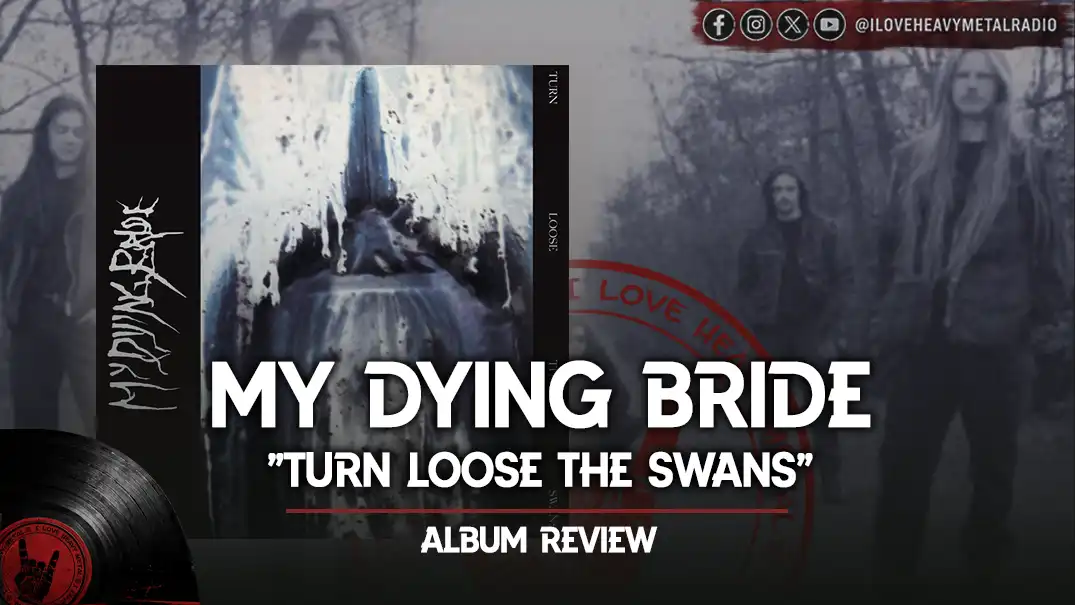

My Dying Bride took a slower, darker path on “Turn Loose the Swans”. Released on October 11th 1993, the album mix doom riffs with mournful violin and vocals that move between death metal growls and sorrowful singing. It’s a sound that gives the music a lot more room to breathe.
This is the English doom metal band second full-length album, but it sounded very different from their debut “As the Flower Withers”. The music became slower, the songs longer and sadness moved right to the front. This wasn’t just a heavier version of the first album. My Dying Bride were taking their sound in a new direction.
And what a direction it was.
A Different Kind of Darkness
The biggest change is hard to miss. Martin Powell violin became a central part of the music, adding a mournful sound that fits the heavy riffs instead of simply sitting in the background. It gives the album a feeling that is hard to separate from the band identity.
Aaron Stainthorpe also pushed his vocals further. His death metal growls and grunts are still there, but he mixes them with spoken words and a clean, sorrowful singing voice. That contrast makes the songs feel more personal. One moment, the music sounds crushing; the next, it feels almost painfully beautiful.
The guitars, bass and drums still brings plenty of weight, but “Turn Loose the Swans” doesn’t rely on heaviness alone. It takes its time, lets the melodies breathe and isn’t afraid to leave space for silence and emotion.
Two Tracks That Break the Rules
The album opens with “Sear Me MCMXCIII” a stripped-down piece built around Aaron vocals and Martin keyboards and violin. There are no guitars, bass or drums. After that, the album moves into its slow, heavy world, making the opening feel like a doorway into something darker.
At the other end “Black God” closes the album in a similar stripped-back style, again without the usual band instrumentation. Guest female vocals from Zena Choi add another layer to the final track.
These two songs show that My Dying Bride understood something important: heaviness doesn’t always come from a wall of guitars. Sometimes, a voice and a few carefully chosen sounds can leave a stronger mark.
Love, Loss and Dark Thoughts
The lyrics explore lovelorn longing and anti-Christian themes, giving the album more than just a gloomy sound. Aaron words can be difficult to pin down, but the emotions behind them are easier to feel.
“The Songless Bird” even received a music video, featuring the band running through the wilderness in slow motion. Meanwhile, “The Crown of Sympathy” became one of the album notable tracks, later receiving a remixed version on the band “I Am the Bloody Earth” single.
The album artwork was created by Aaron Stainthorpe and Andrew Craighan, adding another personal touch to a record that feels closely tied to the band own vision.
An Album That Helped Shape a Genre
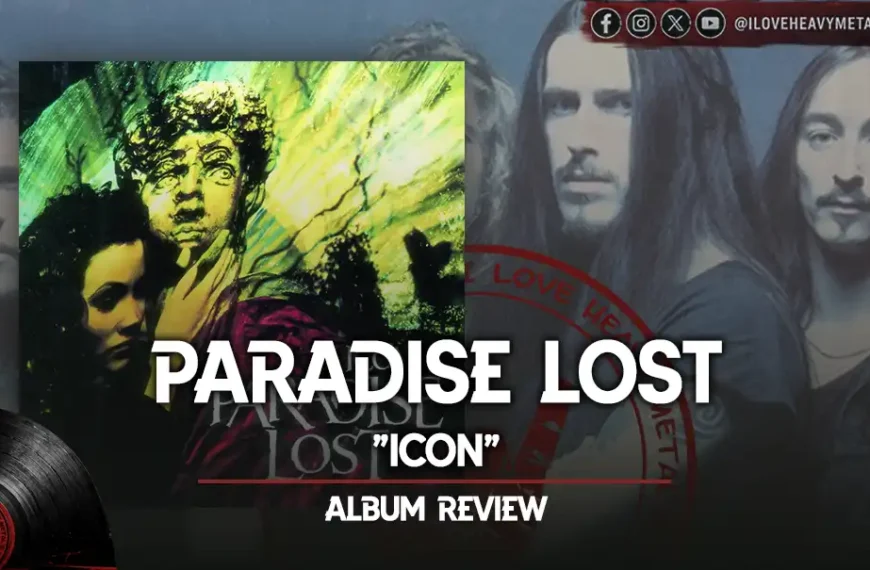
Alongside bands such as Paradise Lost and Anathema, My Dying Bride helped establish the British death-doom sound. “Turn Loose the Swans” also pointed toward the gothic metal elements that would become more famous on their later albums.
Its influence isn’t difficult to understand. The album brings together death metal heaviness, slow doom riffs, violin, clean singing and a deeply melancholic mood without making any of them feel out of place.
For fans who want their metal dark, emotional and heavy, this record remains a powerful listen. It doesn’t rush to the next riff or try to make every moment loud. It lets the mood build, and that’s part of what makes it work.
Final Verdict: “Turn Loose the Swans” is a landmark in My Dying Bride career and an essential listen for fans of death–doom and gothic metal. It’s heavy without being fast, emotional without losing its edge and dark without sounding one-dimensional.
If some albums make you want to bang your head. This one makes you stop, listen and sink into the darkness.

 By
By
 By
By