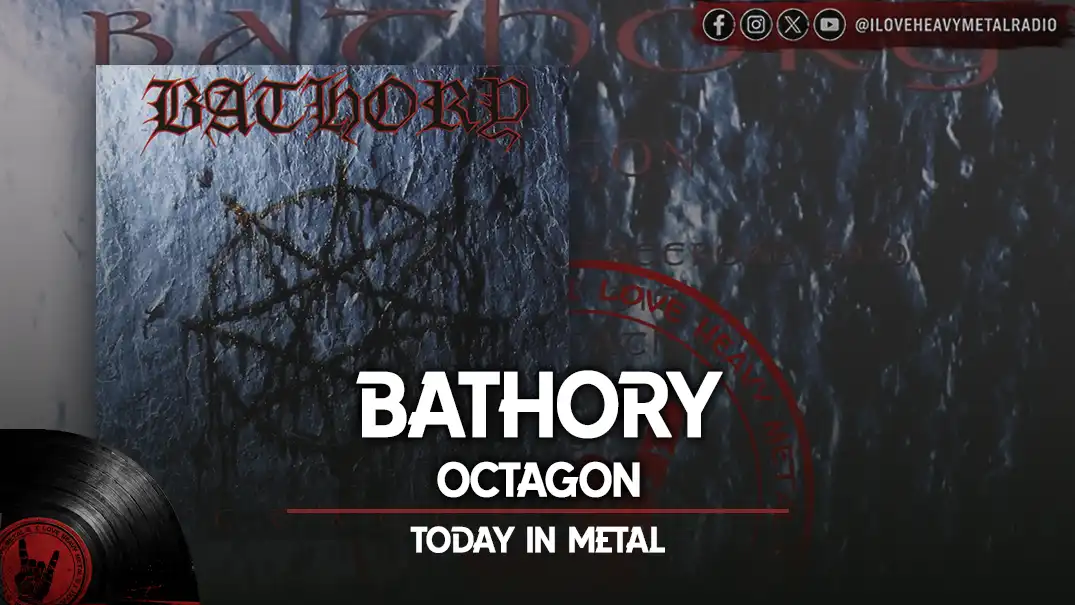

On October 17th, 1995 Bathory released “Octagon”, album that took the band in a very different direction. After helping shape black metal and later exploring epic Viking metal, Quorthon turned toward raw, aggressive thrash metal. Not everyone was ready for that change.
Following “Requiem” Bathory continued down the retro-thrash path. But “Octagon” came with rough edges, strange production choices and a few stories that sound almost too strange to be true. It’s one of those records where even the details behind the music can be as interesting as the songs themselves.
A Different Side of Bathory
By 1995, Quorthon was no longer interested in repeating the sound that had made Bathory such an important name in extreme metal. “Octagon” pushed further into thrash, leaving the band earlier black metal and epic Viking metal styles behind.
The result was raw and aggressive, but also divisive. Some listeners were left wondering what had happened to the Bathory they knew. Others could appreciate Quorthon decision to take another turn rather than stay in one place.
The lineup featured Quorthon on vocals and guitar, Kothaar on bass and Vvornth on percussion and drums. But one part of the record would become a talking point long after its release: the drum sound.
The Drums That Sounded Like a Trash Can
The percussion on “Octagon” is hard to ignore. The drums sit so high in the mix that their sharp, hollow, almost plastic-like sound can dominate the music.
Decades later, metal fans began comparing that sound to the infamous drum on Metallica’s “St. Anger” released in 2003. That earned “Octagon” its own kind of unwanted prediction status: Bathory had stumbled into a sound that would later become one of metal most criticized production choices.
Whether you find the drums brutally fitting or simply irritating, they give the album a character that’s difficult to mistake for anything else.
Pig’s Blood? No, Caramel Spray!
The cover has a story worthy of Quorthon taste for dark mystery. It features an octagram painted onto a dark slab of stone, giving the album a stark and almost ritualistic look.
Quorthon initially joked that he had carried the heavy stone out of a quarry himself and painted the symbol with pig’s blood. It sounds like the kind of story that would fit Bathory perfectly.
But the truth was much less sinister. He later admitted that he had used an ordinary can of caramel spray paint.
The actual slate stone used for the cover photograph was kept by his close friend and sound engineer, Rex Gisslén. It was eventually displayed publicly at the Total Metal exhibition in Stockholm.
So much for the pig’s blood but the legend was certainly more entertaining than the truth!
Two Songs the Label Didn’t Want
The original plans for “Octagon” included two additional songs: “Resolution Greed” and “Genocide”. Both were removed at the request of Black Mark Production before the album came out.
The tracks weren’t lost forever. They later appeared on the 1998 compilation “Jubileum, Vol. 3”, giving fans a chance to hear material that had been left off the original release.
The changes also created a last-minute gap in the tracklist. Quorthon filled it by recording a cover of KISS’s “Deuce” just weeks before the album release.
It was an unusual choice for Bathory, but Quorthon had been a huge KISS fan in his youth. His early stage name “Ace Shoot” was even a nod to guitarist Ace Frehley.
Still, his feelings about the cover changed with time. Looking back, Quorthon called the recording “truly disastrous”. It’s hard not to smile at the thought of a musician paying tribute to one of his early influences and later being so unhappy with the result.
A Razor Blade and the Bathory Logo
The sharp-edged Bathory logo on “Octagon” also has a hands-on story behind it. Quorthon personally designed and crafted this version to mark the band tenth anniversary, cutting pieces of black leather with a real razor blade to form the letters.
It’s a fitting detail for a band whose image was built around dark symbols and a raw, uncompromising approach. No fancy digital tricks were needed just leather, a blade and Quorthon own design.
A Strange Chapter in Bathory’s Story
“Octagon” is not the Bathory album everyone reaches for first. It followed a run of records that helped define extreme metal and its shift toward retro thrash was bound to divide listeners. The unusual drums, the last-minute KISS cover, and the songs removed before release only add to its reputation as one of the band strangest chapters.
But Quorthon never made his career by standing still. Even when the results were controversial, he was willing to try something different.
On October 17th, 1995, “Octagon” showed a side of Bathory that many fans might not have expected and one that still sparks debate today.
What’s your verdict on “Octagon”? An underrated thrash experiment or one Bathory album that should have stayed in the vault?

 By
By
 By
By
 By
By