
There are albums that are more than just riffs. They signify a comeback, end a previous chapter and serve as a reminder to everyone of the original significance of a band.
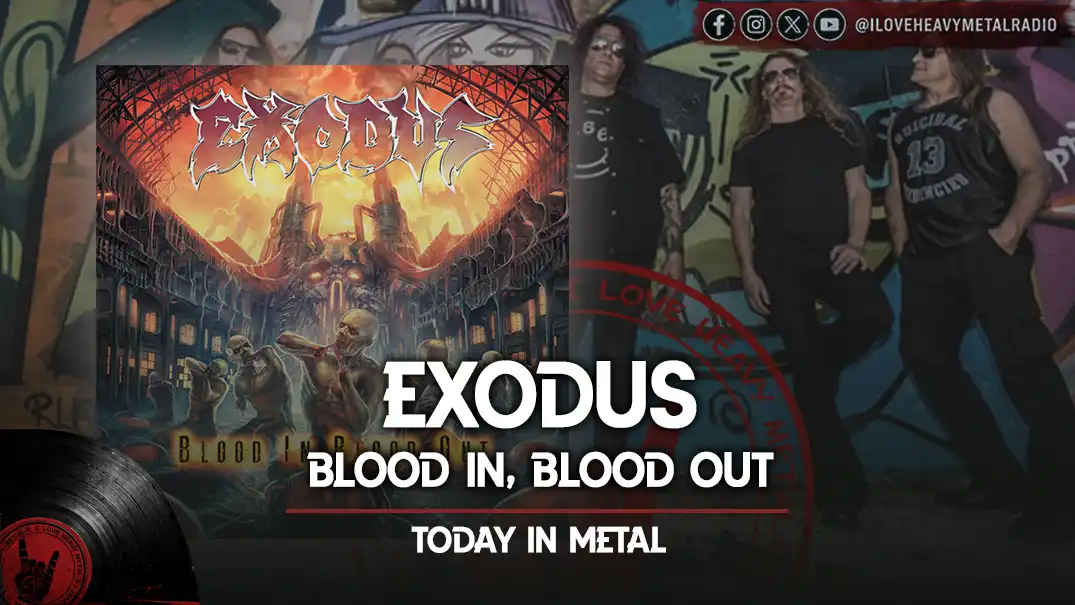
October 14th, 2014 Exodus released “Blood In, Blood Out”, their eleventh studio album and the first to feature Steve “Zetro” Souza on vocals since “Tempo of the Damned” in 2004. After a decade away Zetro was back behind the microphone and Exodus sounded ready to hit hard again.
The album also brought a surprise connection to the band early days: former Exodus guitarist Kirk Hammett, now known around the world for his work with Metallica, returned to play a solo on “Salt the Wound”.
Zetro Is Back – And Exodus Means Business
The road to “Blood In, Blood Out” wasn’t exactly smooth. In June 2014, Exodus announced that Rob Dukes had been fired and that Souza would take his place. The change came while the band was already recording the new album, so Zetro stepped in to record the vocals.
The difference was clear in the band approach. Dukes had described the new material as faster, shorter and more punk-influenced than the longer metal epics on the previous records. Exodus were ready to get straight to the point.
The title track became a fitting anthem for the new chapter. Fast, aggressive and packed with the band familiar thrash attack “Blood In, Blood Out” made it clear that Exodus weren’t interested in slowing down.
And with Zetro back, the album had a voice longtime fans knew well.
Kirk Hammett Returns to His Old Thrash Roots
The biggest surprise might be the guest appearance on “Salt the Wound”.
Before Metallica, Kirk Hammett was part of Exodus. His return for a guitar solo on the album brought that history full circle, connecting the band early Bay Area thrash days with its 2014 lineup.
“Salt the Wound” was released as the first single on September 10th, 2014 ahead of the album. Having Hammett appear on the track gave fans another reason to check it out but the song still had to stand on its own, and its sharp riffs and aggressive attack did exactly that.
It’s one of those guest spots that means something beyond a famous name on the credits. It connects Exodus to the roots of a scene they helped build.
Fast Thrash, Heavy Grooves and a Few Surprises
The album opens with “Black 13”, featuring an intro produced by Dan the Automator. It’s an unusual touch before the thrash assault kicks in, showing that Exodus were willing to experiment without leaving their core sound behind.
Then the riffs take over.
“Body Harvest” delivers a fast, aggressive attack, driven by Tom Hunting relentless drumming and classic Bay Area thrash energy. “BTK” takes a heavier, slower approach and features guest vocals from Testament’s Chuck Billy. He also appears on the title track, adding another connection to the Bay Area metal family.
The album mix of speed and crushing mid-tempo sections gives the songs different moods without losing the aggression. There’s no shortage of sharp riffs, loud drums or the kind of energy that makes you want to turn the volume up.
A New Chapter for Exodus
“Blood In, Blood Out” received generally positive reviews and entered the Billboard 200 at No. 38, giving Exodus their highest US chart position at the time.
The band took the album on the road with Souza for the first time since his departure in 2004. Their touring included shows in South America, a US run with Slayer and Suicidal Tendencies, and later dates with Testament and King Diamond.
The lineup featured Souza on vocals, Gary Holt and Lee Altus on guitars, Jack Gibson on bass and Tom Hunting on drums. Gibson also stepped up to engineer the guitar and vocal tracks, using his experience with Pro Tools after producer Andy Sneap schedule made him unavailable for tracking.
For a band that had spent years working through lineup changes and recording delays “Blood In, Blood Out” was a strong return to action.
It brought Zetro back, reunited Exodus with Kirk Hammett for one memorable solo and made an album full of the speed and aggression fans wanted.
Was “Blood In, Blood Out” the comeback Exodus needed or do their classic-era albums still rule?

 By
By
 By
By