
Some albums are simply great. Others feel like a band reaching the absolute limit of what it can do.
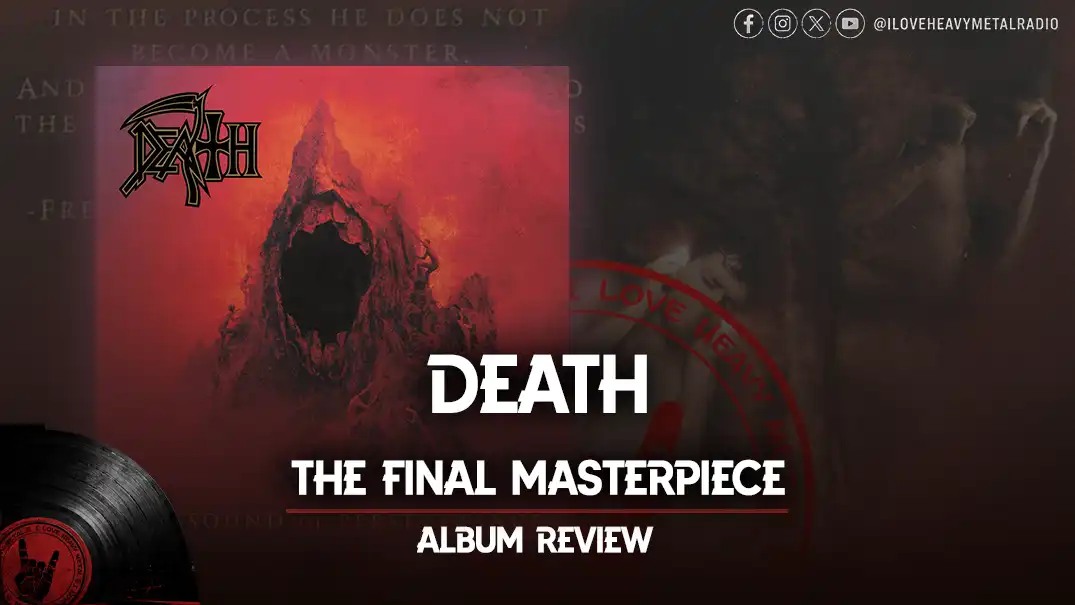
Death’s “The Sound of Perseverance” belongs in the second category.
Released on August 31st, 1998, “The Sound of Perseverance” was the seventh and final studio album from Death and the last statement from Chuck Schuldiner groundbreaking band. By this point, Death had moved far beyond the raw death metal attack of their early years. What Schuldiner created here was technical, melodic, progressive and fiercely intense, proving once again that extreme metal didn’t have to stay in one box.
And there is a fascinating story behind how the album came together.
It Almost Wasn’t a Death Album
One of the most interesting pieces of “The Sound of Perseverance” trivia is that much of the material originally came from Chuck Schuldiner work for another project: Control Denied.
That band was intended to feature clean vocals, reflecting the increasingly progressive direction Schuldiner was exploring. However, his record label pushed him to release the material under the established Death name.
So instead of quietly becoming a Control Denied record, the songs became the final Death album.
And Chuck made them sound like Death.
Chuck Schuldiner Changes His Voice
If you know Death earlier albums, one thing hits immediately on “The Sound of Perseverance”: Chuck’s voice.
Gone is much of the ultra-low death metal growl associated with records like “Leprosy” and “Scream Bloody Gore”. Here, Schuldiner delivers a much sharper, higher-pitched shriek.
It was another sign that Death was evolving.
The vocals are more piercing and emotional, sitting perfectly alongside music that had become increasingly technical and progressive.
Some old-school fans weren’t immediately convinced.
But listen to the album today and the vocal change makes perfect sense. Chuck wasn’t trying to recreate the Death of 1987. He was pushing the band forward.
Death Goes Progressive
The guitars are where “The Sound of Perseverance” really shows its teeth.
Chuck Schuldiner and Shannon Hamm trade intricate riffs, melodic harmonies and blistering solos, constantly shifting between technical passages and crushing riffs.
Then there’s Richard Christy behind the kit.
His drumming is absolutely relentless, packed with rapid fills, unusual rhythmic changes and creative cymbal work. The performance gives the album a chaotic energy without losing control.
And underneath all of it, Scott Clendenin provides the thick low end most famously heard in the opening moments of “Spirit Crusher”.
That bass intro alone is enough to make a metalhead turn the volume up.
“Spirit Crusher” Still Hits Like a Truck
“Spirit Crusher” is one of the album defining tracks.
It starts with that unforgettable bass introduction before exploding into massive riffs and shifting rhythms. The song manages to be technical without becoming sterile, heavy without relying on simplicity, and melodic without losing its extreme-metal identity.
That’s one of Schuldiner greatest strengths.
He could make complicated music feel completely natural.
“Flesh and the Power It Holds” Shows the Full Picture
Then there’s “Flesh and the Power It Holds” one of the album most dynamic tracks.
The song constantly changes gears, moving through intricate guitar passages, crushing riffs and melodic sections without ever feeling like the band is showing off just for the sake of it.
This is progressive metal with death metal aggression still running through its veins.
And that’s essentially what “The Sound of Perseverance” is all about.
Evolution without surrender.
Then Everything Stops for “Voice of the Soul”
And suddenly, Death gets quiet.
“Voice of the Soul” is an entirely instrumental piece built around beautiful acoustic and electric guitar work. After all the technical playing, furious drumming and piercing vocals, the song feels almost like a moment of silence.
It is one of the album most emotional moments.
The surprising part?
Schuldiner had actually written the piece years earlier, during the recording sessions for “Symbolic” in 1995.
It wasn’t simply created as a random instrumental break for “The Sound of Perseverance”. Chuck had been carrying the idea with him for years before finally giving it a home.
And it might be the most powerful example of his melodic side.
Death Takes on Judas Priest
If the album needed one final kick in the teeth, Schuldiner saved it for the end.
“The Sound of Perseverance” closes with Death ferocious version of Judas Priest’s “Painkiller”.
It’s a wild choice.
The original is already one of heavy metal most intense songs, but Death attack it with their own extreme-metal identity. Chuck high shriek, the frantic guitars and Richard Christy explosive drumming turn the classic into something even more savage.
It’s not a safe cover.
It’s Death taking a legendary metal song and throwing it into the extreme-metal furnace.
The Final Death Lineup
For this final incarnation of Death, Chuck assembled a lineup capable of handling the increasingly technical material.
Chuck Schuldiner – guitar and vocals
The mastermind, songwriter and only constant member of Death.
Shannon Hamm – guitar
Hamm brought another layer of technical guitar work and traded intricate passages with Schuldiner.
Scott Clendenin – bass
His punchy bass playing helped give tracks such as “Spirit Crusher” their enormous low-end impact.
Richard Christy – drums
A power behind the kit whose frantic fills and rhythmic precision became a huge part of the album sound.
Interestingly, much of this same musical chemistry would continue into Schuldiner’s Control Denied project, with Steve Di Giorgio replacing Clendenin on the band debut album “The Fragile Art of Existence”.
A Final Album That Sounds Like a Beginning
There is something almost strange about calling “The Sound of Perseverance” a final album.
It doesn’t sound like a band running out of ideas. Quite the opposite.
It sounds like Chuck Schuldiner was still discovering how far he could push Death.
The technical guitar work was more sophisticated. The songwriting was more progressive. The vocals had changed. The arrangements were more melodic. And yet the music still had the violence and intensity that made Death one of extreme metal most important bands.
That is why the album has aged so well.
Some death metal purists will always prefer the rawer attack of the early records. That’s understandable. “Scream Bloody Gore” and “Leprosy” are beasts of a completely different kind.
But “The Sound of Perseverance” was never trying to compete with them.
It was showing where Chuck Schuldiner wanted to go next.
The Sound of Perseverance
More than two decades later “The Sound of Perseverance” remains one of the towering achievements of progressive and technical death metal.
It’s brutal. It’s melodic. It’s complicated. It’s emotional.
And sometimes, it’s downright beautiful.
Most importantly, it sounds like Chuck Schuldiner refusing to stand still.
That makes the final Death album a fitting ending to the band story but also a frustrating reminder of how much more music Schuldiner might have created if he had been given more time.
From the crushing opening riffs of “Scavenger of Human Sorrow” to the haunting beauty of “Voice of the Soul” and the full-speed assault of “Painkiller”, “The Sound of Perseverance” isn’t just a great Death album.
It’s a final warning shot from a musician who was still pushing forward.
Essential tracks: “Spirit Crusher”, “Flesh and the Power It Holds”, “Voice of the Soul”, “Scavenger of Human Sorrow” and “Painkiller”.
Turn it up.
Chuck would probably have expected nothing less.

 By
By
 By
By