
Some dates in music history are packed with great releases.
August 28th is one of them.
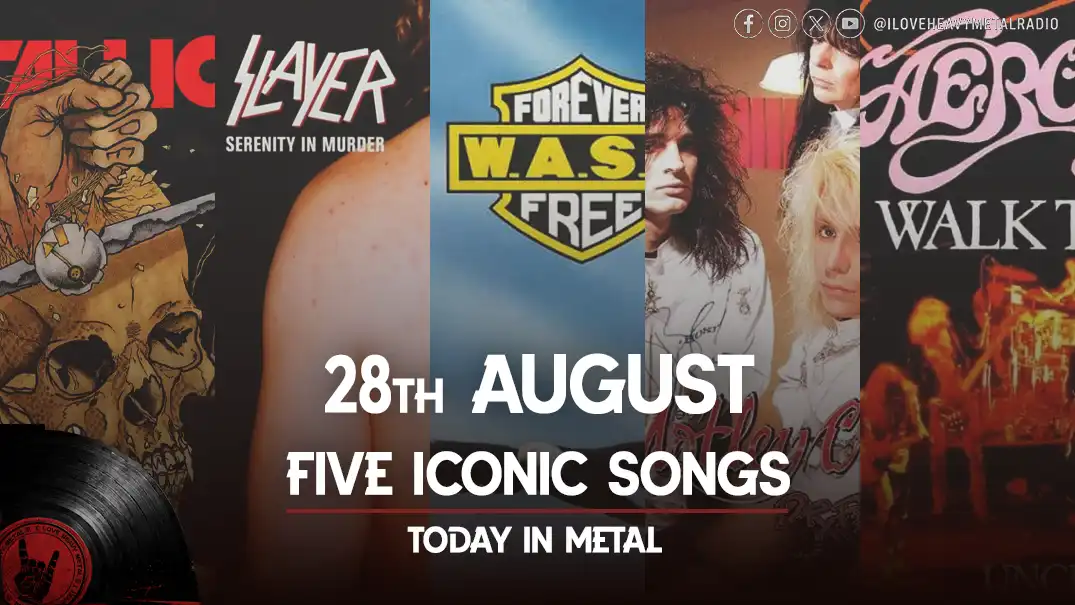
On this day across five different years Aerosmith, Metallica, W.A.S.P., Mötley Crüe and Slayer put their names on songs that couldn’t sound much more different from one another. Yet all belong to the same great, messy family of loud guitars, big riffs and unapologetic attitude.
From Aerosmith swaggering hard-rock groove to Slayer cold-blooded thrash attack, August 28 gives metalheads a pretty good reminder of why this music has never needed to stay in one box.
And if we had to pick the one that hits hardest today?
Metallica’s “Harvester of Sorrow”.
Metallica — “Harvester of Sorrow” (1988)
By 1988 Metallica were no longer simply one of the most exciting young thrash bands around.
They were becoming something much bigger.
“Harvester of Sorrow” arrived on August 28th 1988, as the first single from “…And Justice for All”. It was also the first Metallica single to feature Jason Newsted following Cliff Burton death.
But “Harvester of Sorrow” wasn’t built around speed.
That is part of what makes it so effective.
The song moves with a heavy, deliberate stomp. The main riff feels almost mechanical, while James Hetfield vocal performance gives the track an increasingly disturbing sense of anger.
The lyrics tell the story of a man whose childhood trauma, addiction and rage eventually turn violently toward his own family.
This wasn’t Metallica trying to write another “Seek & Destroy”.
They were showing just how dark their songwriting could become.
And there was another interesting detail surrounding the single: its B-sides were covers of “Breadfan” by Budgie and “The Prince” by Diamond Head, two bands that had helped shape the heavy music world Metallica themselves came from.
So even at the height of their rise, Metallica were still pointing backward while pushing forward.
That’s very Metallica.
Aerosmith — “Walk This Way” (1975)
Twenty-five years before the new millennium Aerosmith were already laying down one of rock’s most recognizable grooves.
“Walk This Way” was released as a single on August 28th 1975, from “Toys in the Attic”.
And here’s something younger listeners might find surprising:
It wasn’t an instant hit.
The original single initially failed to chart. After being reissued, however, it climbed to No. 10 on the Billboard Hot 100.
Of course, that wasn’t the end of the story.
More than a decade later Aerosmith would join Run-DMC for a completely unexpected reworking of “Walk This Way” helping create one of the most famous rock-meets-hip-hop moments in music history.
Suddenly, a song that had once struggled to find its audience became a bridge between two completely different musical worlds.
But forget the history for a second.
Just listen to that riff.
It still walks into the room like it owns the place.
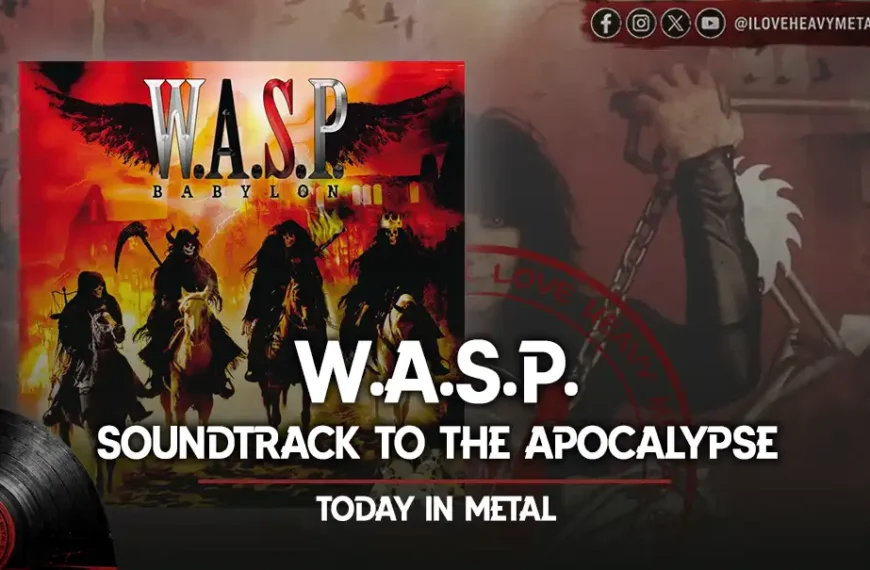
W.A.S.P. – “Forever Free” (1989)
Then we jump into 1989 and find W.A.S.P. in a very different mood.
“Forever Free” came from “The Headless Children” an album that showed there was considerably more going on in W.A.S.P. than the shock-rock image that had first made the band famous.
The song brings a more melodic side of Blackie Lawless and the band to the front.
And that’s one of the things that makes revisiting late ’80s metal so much fun.
Yes, there were massive hair, huge stages and enough leather to upholster a small city.
But underneath all that were bands capable of writing genuinely memorable songs.
“Forever Free” is one of those tracks that reminds you W.A.S.P. could hit hard without constantly reaching for the darkest or most outrageous material.
Mötley Crüe – “Dr. Feelgood” (1989)
August 28th 1989 also takes us into the world of Mötley Crüe.
Mötley Crüe had already built a reputation for excess, chaos and larger-than-life rock ‘n’ roll. But “Dr. Feelgood” showed a band that had learned how to turn all of that energy into one seriously tight song.
The track became the title song of their “Dr. Feelgood” album and one of the biggest singles of the band career. Its huge guitar sound, pounding drums and instantly recognizable chorus helped push Mötley Crüe from notorious hard-rock troublemakers into genuine arena-rock giants.
There’s also a darker story hiding underneath the swagger. “Dr. Feelgood” deals with a drug dealer and its subject matter reflected the band own very real experiences with addiction and excess.
That’s part of what gives the song its punch.
It sounds celebratory on the surface, but there’s something much uglier underneath it.
And that contrast is classic Mötley Crüe. Big riffs, bigger attitude and just enough danger to make you turn it up again.
Slayer – “Serenity in Murder” (1995)
And then Slayer arrive to ruin everyone’s afternoon. Perfect.
“Serenity in Murder” comes from “Divine Intervention” Slayer 1994 album featuring new drummer Paul Bostaph after Dave Lombardo departure. The song later received its own “Serenity in Murder” EP, released on August 28th 1995.
The track is short, vicious and completely uninterested in being friendly.
Which is exactly what you want from Slayer.
Where Aerosmith grooves, Slayer attacks.
Where Mötley Crüe builds a giant arena wall of sound, Slayer cuts straight through it.
And that’s why this particular August 28 lineup works so well.
Five songs. Five different kinds of heavy.
Look at the five artists together:
Aerosmith – swagger.
Metallica – darkness.
W.A.S.P. – melody.
Mötley Crüe – excess.
Slayer – violence.
And somehow, they all make sense in the same conversation. That’s the beauty of heavy music.
It can be bluesy. It can be melodic. It can be theatrical. It can be brutally aggressive. It can fill a stadium.
Or it can make you want to put your headphones on, close the door and disappear for 45 minutes.
There isn’t one correct way to be a metalhead.
But which one gets your vote?
For us “Harvester of Sorrow” is today’s winner.
That opening riff still sounds enormous.
But maybe your choice is “Walk This Way”.
Maybe you want the W.A.S.P. melody.
Maybe you’re putting on “Dr. Feelgood” and turning the speakers toward the neighbors.
Or maybe you’re going straight for Slayer.
That’s the fun part.
August 28th gave us five very different reasons to turn the volume up.
Which one are you playing first?
And if you’re only allowed to keep one of these five tracks on your playlist, which one survives?
Tell us.
Because around here, there is always another riff worth arguing about.

 By
By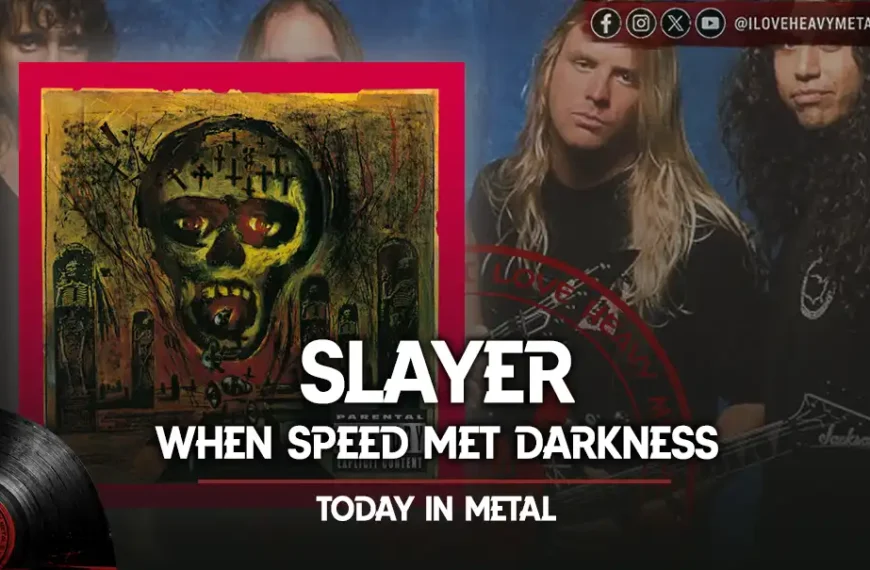
 By
By