
There are albums you listen to. And then there are albums you return to.
It doesn’t matter how many times you’ve heard them. You know every riff before it arrives, every drum fill, every scream, every little detail buried somewhere in the mix. You could probably sing along while half asleep.
And somehow, they still work.
That is one of the strange things about heavy metal. A song released 20, 30, 40 or even 50 years ago can still hit with the same force it had when somebody first dropped the needle on the record.
Maybe that’s because great metal isn’t really tied to a particular year. The production can sound old. The hairstyles can look ridiculous. The album cover might scream its decade from across the room.
But the riff doesn’t care.
The albums that refuse to grow old
Ask 100 metalheads which album they can listen to forever and you’ll probably get 100 different answers.
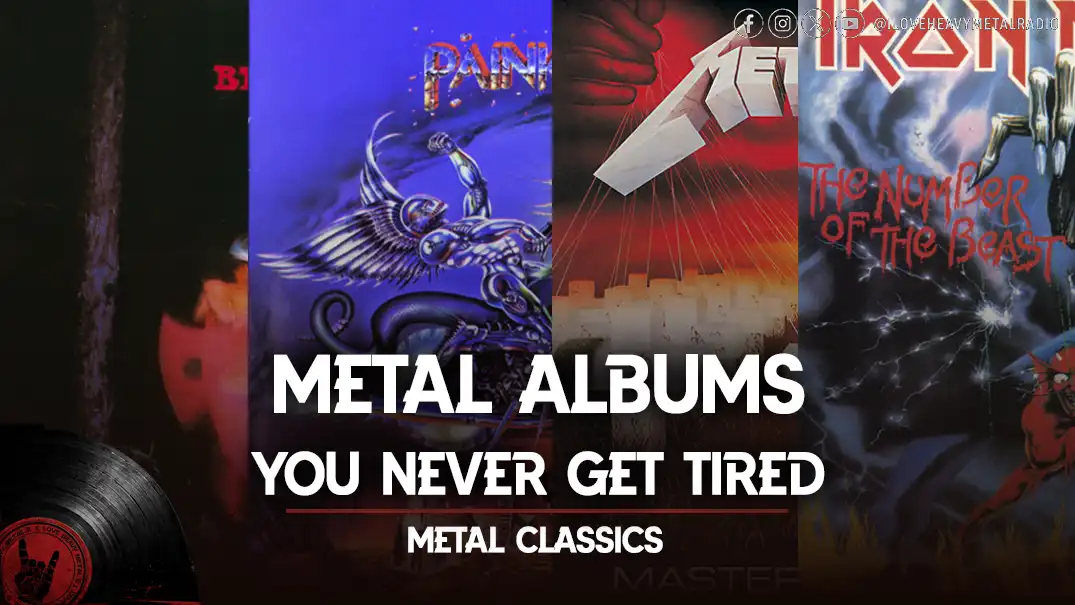
One person will immediately reach for Master of Puppets. Another will swear by Painkiller. Someone else will tell you that nothing has ever beaten Paranoid. A death metal fan might disappear for ten minutes while explaining why Left Hand Path is the answer.
And that’s exactly what makes this conversation so much fun.
There isn’t one correct list.
But there are albums that seem to have survived every change in metal.

Black Sabbath – “Paranoid” (1970)
Before metal had completely figured out what it wanted to become, Black Sabbath were already building the blueprint.
“Paranoid” is remarkably direct. There is no need for endless explanation. The riffs arrive, the drums hit, Ozzy voice cuts through the darkness and suddenly the room feels different.
More than five decades later, tracks like “War Pigs”, “Paranoid” and “Iron Man” remain instantly recognizable.
That’s not nostalgia. That’s songwriting.
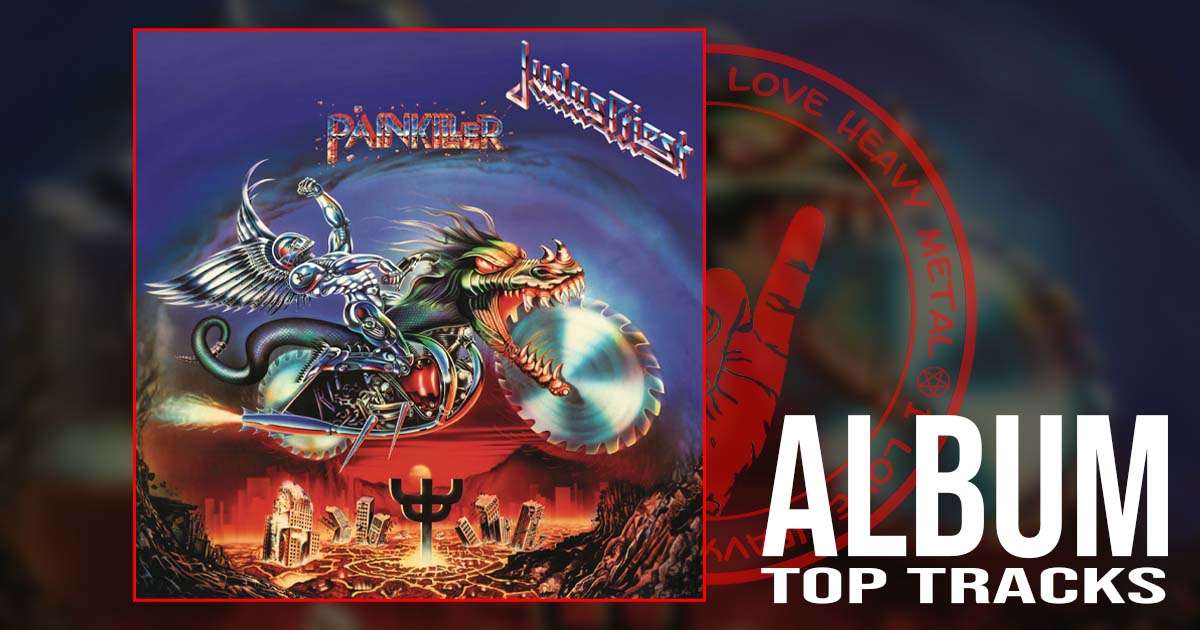
Judas Priest – “Painkiller” (1990)
If “Paranoid” helped establish the language of heavy metal “Painkiller” sounds like someone turned the volume, speed and aggression all the way up.
The opening drum attack alone is enough to wake up a sleeping neighborhood.
Then Rob Halford comes flying in.
What makes the album so powerful is that Judas Priest weren’t trying to sound young. They were veterans showing an entire generation how much life was still left in the genre.
The title track remains one of metal great adrenaline shots.
Put it on when you’re tired. See what happens.

Metallica – “Master of Puppets” (1986)
There is a reason this album keeps appearing in conversations about the greatest metal records ever made.
“Master of Puppets” manages to be aggressive without sacrificing structure, technical without becoming cold, and memorable without becoming predictable.
The title track alone contains enough riffs to build an entire album around.
But perhaps the real magic is how much atmosphere sits between the aggression. “Orion” proves that instrumental metal can carry emotion without needing a vocalist to explain what you’re supposed to feel.
That is a difficult trick. Metallica made it sound effortless.

Iron Maiden – “The Number of the Beast” (1982)
There are albums that belong to a genre.
And then there are albums that help define it.
Iron Maiden’s “The Number of the Beast” belongs firmly in the second category.
Bruce Dickinson arrival gave Maiden an enormous new vocal weapon, while Steve Harris and the band continued developing the galloping, melodic attack that would become unmistakably theirs.
“Run to the Hills”, “Hallowed Be Thy Name” and the title track remain essential metal songs for a reason.
They don’t just sound like 1982. They sound like Iron Maiden.
And that’s the real test of a classic: remove the year, remove the fashion, remove the historical context and does it still sound like itself?
Absolutely.
But here’s where things get interesting
The albums that survive aren’t necessarily the albums with the best production.
In fact, sometimes the opposite is true.
Metalheads have learned to accept imperfections when the music underneath them is powerful enough.
A guitar tone can sound dated. Snare can sound enormous and slightly strange. Vocalist can have a style that would never be approved by a modern producer.
And none of it matters.
Because when the riff is right, the riff is right.
That may be one reason metal has such a strange relationship with time.
Pop music often chases the sound of the moment.
Metal constantly looks backward, forward and sideways at the same time.
A modern band can sound influenced by 1970s doom, 1980s thrash, 1990s death metal and 2000s metalcore sometimes in the same song.
The past isn’t dead. It’s part of the instrument.
The album you discovered at the wrong age
There’s another reason some records never leave us.
Sometimes an album becomes important because of when you heard it.
Maybe you were 15. Maybe you were angry. Maybe you were sitting alone with headphones on while everyone else in the house was asleep.
Maybe a friend handed you a scratched CD and said:
“Listen to this.”
And suddenly your idea of music changed.
That album may not even be the objectively greatest record ever made.
It doesn’t have to be. It belongs to your history.
That’s something music algorithms can’t really reproduce.
They can recommend another band.
They can calculate what you might like.
They can find something sonically similar.
But they can’t tell you what it felt like to discover a record for the first time.
This is why metal fans keep coming back
Heavy metal has never been just about listening.
It’s collecting. It’s discovering. It’s arguing. It’s defending your favorite band like you’re their lawyer.
It’s buying an album because the cover looks insane and discovering three weeks later that you’ve accidentally found your new favorite band.
It’s telling somebody “You HAVE to hear this” and waiting for their reaction.
And perhaps most importantly, it’s returning to the records that have already proven themselves.
Because sometimes you don’t want something new.
Sometimes you want the opening riff of an album you’ve heard a hundred times.
You know what’s coming. And you press play anyway. That’s not boredom. That’s home.
So what’s the one album you can never get tired of?
This is where the list should stop. Not because there aren’t hundreds more albums that deserve to be here.
There are.
But because your answer belongs in this article too.
Is it Black Sabbath?
Iron Maiden?
Judas Priest?
Metallica?
Slayer?
Megadeth?
Pantera?
Death?
Sepultura?
Motörhead?
Or something completely different that nobody else would have thought of?
Tell us the album you can put on today, tomorrow or ten years from now and still get that same feeling when the first riff kicks in.
Because that’s the real test of a metal classic.
Not how old it is. Not how many awards it won. Not how many copies it sold.
Just this:
Does it still make you turn the volume up?
For a great metal album, the answer is usually yes.
And that’s why heavy metal never dies.

 By
By
 By
By