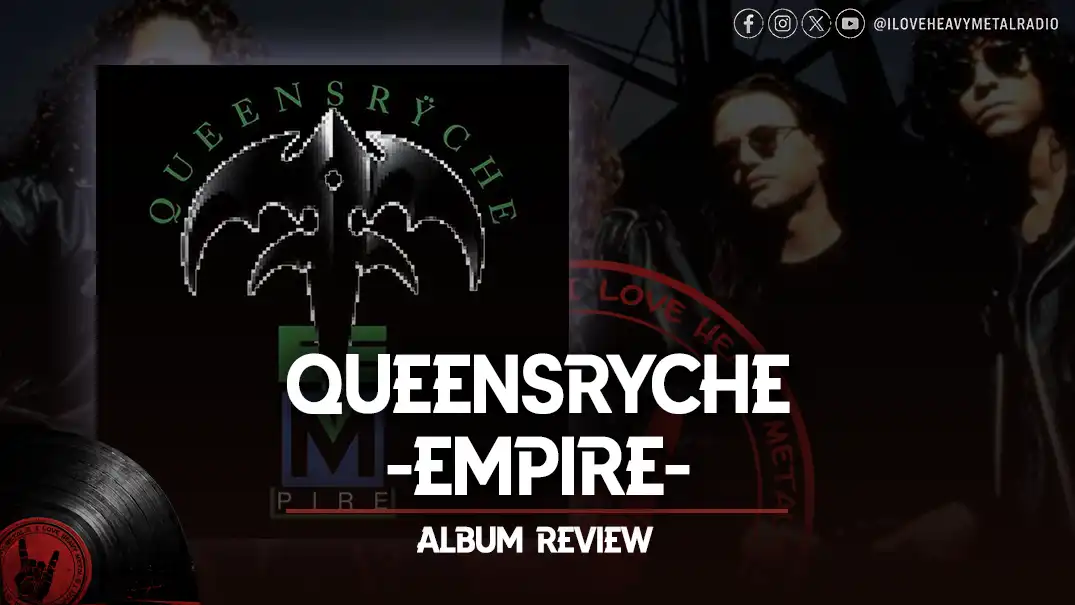
Following the groundbreaking success of “Operation: Mindcrime”, Queensrÿche faced an almost impossible challenge: how do you follow one of the greatest concept albums in metal history? Their answer arrived on August 20th 1990, with “Empire”. Album that traded an intricate rock opera for a collection of powerful, standalone songs without sacrificing the band progressive soul.
The gamble paid off. “Empire” became Queensrÿche biggest commercial success, earning triple-platinum status and introducing the Seattle band to a much wider audience. Some longtime fans questioned the more polished direction, but there’s no denying that “Empire” remains one of the finest examples of progressive metal meeting arena rock.
Working with producer Peter Collins, known for his work with Rush, the band crafted a crystal-clear sound where every instrument shines. The technical musicianship was still there, but the songs became more direct and memorable. It was progressive metal made accessible without feeling watered down.
The album opens with “Best I Can” an energetic statement that combines massive guitar riffs with atmospheric keyboards. The song inspiring story of overcoming adversity immediately sets an optimistic tone. “The Thin Line” follows with one of the album most underrated performances, blending Eddie Jackson driving bass with lyrics exploring the fragile boundary between love and hate.
For many fans “Jet City Woman” is pure Queensrÿche magic. Written by guitarist Chris DeGarmo as a tribute to his wife, it’s an emotional anthem about life on the road and the joy of returning home. With its chorus and unforgettable melody, it quickly became one of the band signature songs.
The album also isn’t afraid to tackle darker subjects. The title track “Empire” delivers one of the heaviest moments on the record, addressing crime, drugs and social decay through crushing riffs and dramatic storytelling. “Della Brown” slows things down for a haunting character study of homelessness and poverty, proving the band could combine powerful social commentary with progressive songwriting.
Then comes “Silent Lucidity”. Inspired by the concept of lucid dreaming and elevated by Michael Kamen breathtaking orchestral arrangement, the acoustic ballad became a worldwide hit. It topped the Mainstream Rock chart, reached the Billboard Top 10, and earned two Grammy nominations. More importantly, it introduced millions of listeners to Queensrÿche without compromising the band identity.
Other highlights include the melodic “Another Rainy Night (Without You)” the environmentally charged “Resistance” and the emotional closer “Anybody Listening?” a slow-building finale that questions whether society still seeks truth or simply settles for distraction.
What makes “Empire” so enduring is its balance. It delivers radio-ready hooks while retaining the sophistication that made Queensrÿche unique. Geoff Tate gives one of the finest vocal performances of his career, effortlessly moving from delicate emotion to powerful high notes, while the band musicianship remains world-class throughout all eleven tracks.
Yes, “Operation: Mindcrime” may be the band artistic masterpiece, but “Empire” proved that progressive metal could conquer the mainstream without losing its intelligence. More than three decades later, it remains one of the defining albums of the early ’90s. Record where technical brilliance, unforgettable melodies and meaningful songwriting came together perfectly.
Fan Question:
Which “Empire” classic stands above the rest: “Silent Lucidity”, “Jet City Woman”, “Anybody Listening?” or another favorite? And do you prefer “Empire” or “Operation: Mindcrime”?

 By
By
 By
By