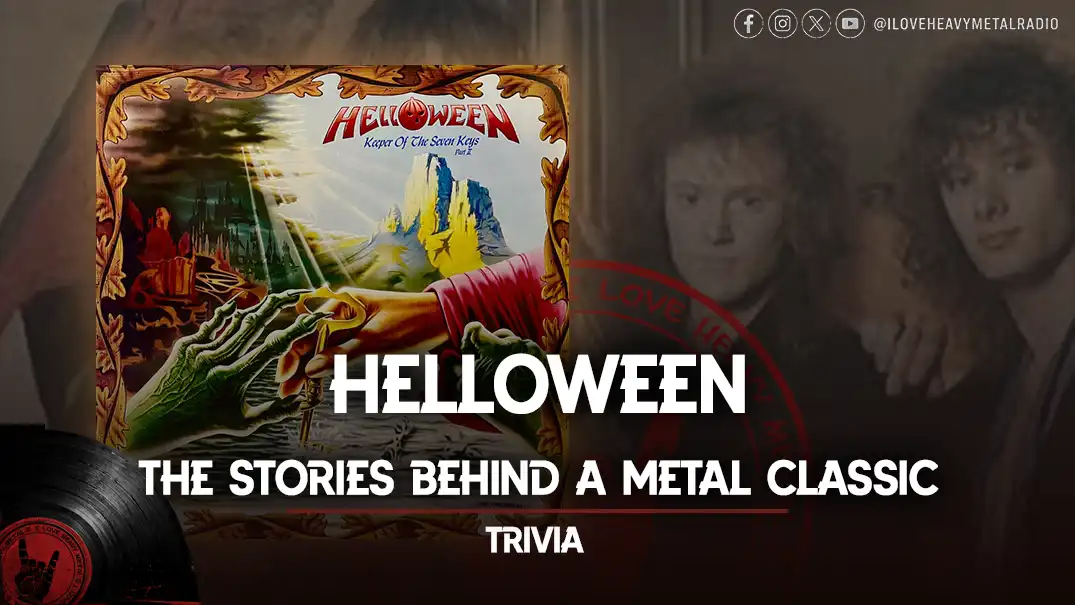

On August 29th 1988, Helloween released “Keeper of the Seven Keys: Part II”. The album that helped turn the German band into one of the biggest names in European metal.
For fans, the album needs little introduction. “Eagle Fly Free”, “I Want Out”, “Dr. Stein” and the massive title track became essential pieces of the power metal story. But behind those songs are some pretty interesting details about how the album was recorded, mixed and released.
Here are a few pieces of “Keeper of the Seven Keys: Part II” trivia that even longtime Helloween fans might have missed.
The Band Literally Recorded Around the Clock
Recording the album at Horus Sound Studio in Hannover, Germany, was anything but a relaxed studio session.
From May to June 1988, Helloween worked around the clock, with the production duties effectively split into shifts. Producer Tommy Newton worked during the day, while Tommy Hansen handled the night sessions.
That unusual schedule wasn’t exactly a recipe for everyone agreeing on how the album should sound.
“Eagle Fly Free” Caused a Mixing Battle
One of the album most famous songs “Eagle Fly Free” became the center of a disagreement between Newton and Hansen.
The two producers had different ideas about the final mix. Newton wanted a more modern sound, while Hansen had his own approach to how the track should come together.
The disagreement became serious enough that Hansen skipped the final mixing stage.
Considering how iconic “Eagle Fly Free” eventually became, it’s a funny bit of history behind one of the album biggest songs.
“You Always Walk Alone” Had an Earlier Life
Here’s one for the deep-dive fans.
“You Always Walk Alone” wasn’t completely new to Michael Kiske.
The song was originally connected to Ill Prophecy, Kiske pre-Helloween band. For “Keeper of the Seven Keys: Part II” it was reworked and recorded again, giving an older composition a new life inside one of Helloween most important albums.
It’s another reminder that bands rarely arrive fully formed overnight sometimes the seeds of their biggest songs were planted years earlier.

Where Was “Save Us”?
Here’s a release-history oddity that can make collecting Helloween records surprisingly interesting.
“Save Us” was left off the original European LP on most pressings. Instead, the song appeared as a bonus track on some releases and was included on the U.S. version through Noise Records.
So depending on which pressing a fan owned “Keeper of the Seven Keys: Part II” could look slightly different.
For vinyl collectors, those little differences are part of the fun.
Kai Hansen’s Last Classic-Era Studio Album With Helloween
The album also marked the end of an important chapter.
“Keeper of the Seven Keys: Part II” was the final studio album to feature guitarist and primary songwriter Kai Hansen during Helloween classic era. Hansen would later leave the band and form Gamma Ray, another hugely influential name in German power metal.
That makes the album feel even more significant in hindsight. It wasn’t just the peak of one era, it was also the closing chapter of the classic Helloween lineup original story.
A 13-Minute Metal Monster
And then there’s the title track.
“Keeper of the Seven Keys” stretches to 13 minutes and 37 seconds, making it the longest song in Helloween catalog at the time.
For a late-1980s metal album, that’s a serious commitment.
The song goes far beyond the usual verse-chorus format, building an epic journey that perfectly fits the album fantasy-inspired atmosphere. It was the kind of track that showed Helloween weren’t interested in keeping their ambitions small.
More Than Just a Classic Album
Thirty-eight years later “Keeper of the Seven Keys: Part II” remains one of those records that helped define what European power metal could become.
It had huge melodies, soaring vocals, twin-guitar fireworks, long-form songwriting and enough fantasy to make the whole thing feel larger than life.
But the trivia behind the album makes it even more interesting: overnight recording sessions, arguments over the mix, songs with roots in earlier bands, strange regional tracklists and a guitarist about to leave and start another legendary chapter.
August 29th, 1988 wasn’t just another release date. It was the day Helloween put one of the defining records of European metal into the world.
And yeah, after all these years, “Eagle Fly Free” still hits. 🤘


 By
By
 By
By