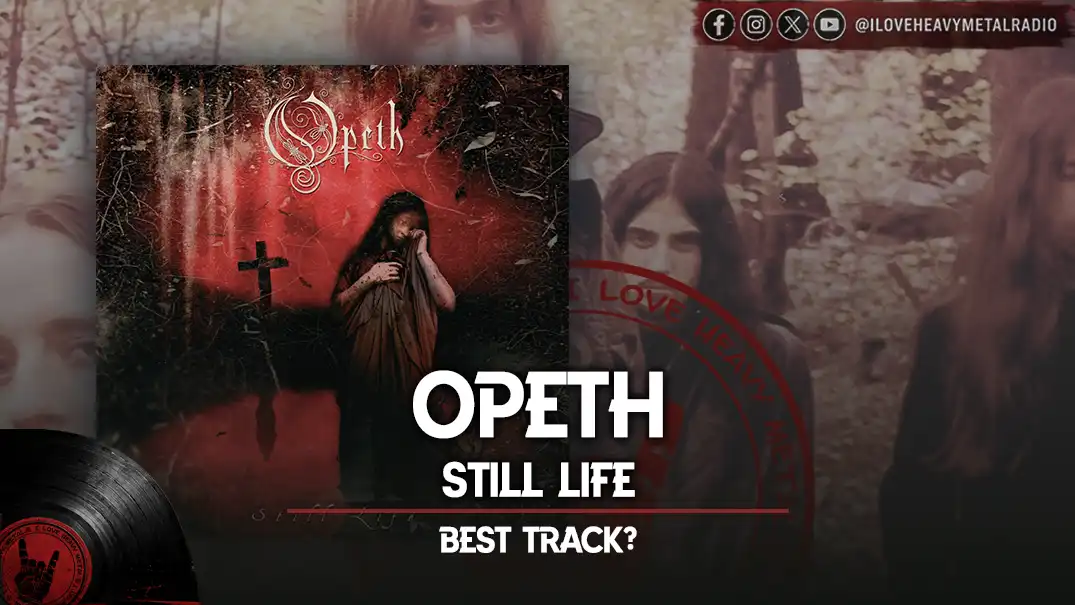

Some albums pull you into another world. “Still Life” is one of them. Released on October 18th, 1999, Opeth’s fourth studio album takes progressive death metal somewhere dark, beautiful and unpredictable. One moment, you get crushing riffs and Mikael Åkerfeldt growls. Then everything slows down into acoustic guitars, clean vocals and melodies that stay with you long after the music stops.
And that is what makes “Still Life” so special. It doesn’t feel like a collection of separate songs. It feels like one long tragic story told through music.
A Dark Story Told Through Music
“Still Life” follows an exiled man who returns home after 15 years, hoping to reunite with his lost love, Melinda. But his return takes place in a world ruled by religious persecution and his story is heading toward a tragic end.
The concept gives the album a dark atmosphere, but Opeth never let the story get in the way of the music. Progressive metal, death metal, progressive rock and dark folk all have their place here. The changes between heavy and soft passages feel natural, making every track part of the bigger picture.
The album features a lineup of Mikael Åkerfeldt on vocals and guitars, guitarist Peter Lindgren, Martin Mendez on bass and Martin Lopez on drums.
Top Tracks from Opeth’s Still Life
Which songs stand out on an album this strong? These seven tracks show different sides of what makes “Still Life” such a classic.
1. The Moor
The album opens with an 11-minute epic that gives you a taste of everything Opeth do so well. Heavy riffs, acoustic passages, dark melodies and Åkerfeldt’s angry growls all come together in a track that keeps changing without losing its direction.
“The Moor” doesn’t rush to make its point. It builds its atmosphere, takes unexpected turns and pulls you deeper into the album. As an opening track, it sets the bar high.
2. Face of Melinda
Not every great Opeth song needs to hit hard from the first second. “Face of Melinda” takes a more delicate approach, with moody, jazz influenced guitar work, fretless bass and emotional clean vocals.
It stands out as one of the album most infectious moments, perfectly balancing beauty and heartbreak. The softer sound doesn’t strip away any of its power. If anything, it makes the heavier moments elsewhere on the record hit even harder.
3. Serenity Painted Death
Here comes the more aggressive side of Opeth. “Serenity Painted Death” has crushing riffs, catchy growled chorus and lots of changes in tempo and guitar work.
It changes moods, but it doesn’t ever lose its bite. It is a reminder that “Still Life” isn’t just about beautiful acoustic passages and long progressive sections. There is plenty of death metal here, too.
4. Godhead’s Lament
“Godhead’s Lament” is full of twists and turns. Its complex transitions and intense vocals give it a theatrical feeling, as if the song is constantly making toward something darker.
It rewards listeners who enjoy progressive metal that refuses to follow a simple structure. There is always another change around the corner and that keeps the track interesting from beginning to end.
5. Moonlapse Vertigo
If you love hearing a band play with rhythm and structure “Moonlapse Vertigo” deserves your attention. The shifting time signatures, including its distinctive 6/8 drum groove, give the song a restless feel.
The interplay between clean vocals and harsh growls injects even more contrast. Nothing stays locked into one mood for too long, and that restless momentum is a massive part of the song appeal.
6. Benighted
After all the heavy riffs and complex arrangements “Benighted” offers a quieter moment. With acoustic guitars, it brings out the folk inspired side of Opeth and lets the melody take the lead.
It’s a different type of strength. This song doesn’t need crushing guitars or growls to make an impact. The album breathes thanks to the delicate atmosphere before the final chapter.
7. White Cluster
The closing track brings the weight back. “White Cluster” moves between heavy and melodic passages, giving the album a dramatic finish that fits its tragic story.
After everything that came before it, the ending feels like the final piece of a much bigger picture. It doesn’t simply close the record, it brings the journey to its conclusion.
An Opeth Classic That Still Stands Tall
Looking at its ratings over the years by listeners and critics the reputation of “Still Life” is easy to understand. Album of the Year has a critic score of 85/100 and a user score of 87/100. Rate Your Music gives it a 4.00/5 and Prog Archives gives it a 4.30/5.
Those numbers tell part of the story and the music tells the rest of it. “Still Life” is a perfect mix of death metal aggression, beauty of acoustic passages and the freedom of progressive rock. All the while creating its own unique identity.
Even more than two decades after its release this is an album well worth hearing from start to finish. Come for the growls and riffs, stay for the melodies and find something new each listen.
Now it’s your turn: Which track from “Still Life” is your favorite “The Moor”, “Face of Melinda”, “Serenity Painted Death” or another song from the album?


 By
By