
Dream Theater have never been a band afraid to push things further. Give them a few minutes and they’ll throw in a crazy time change, a guitar solo, a keyboard battle and probably something you need to hear three times before you figure it out.
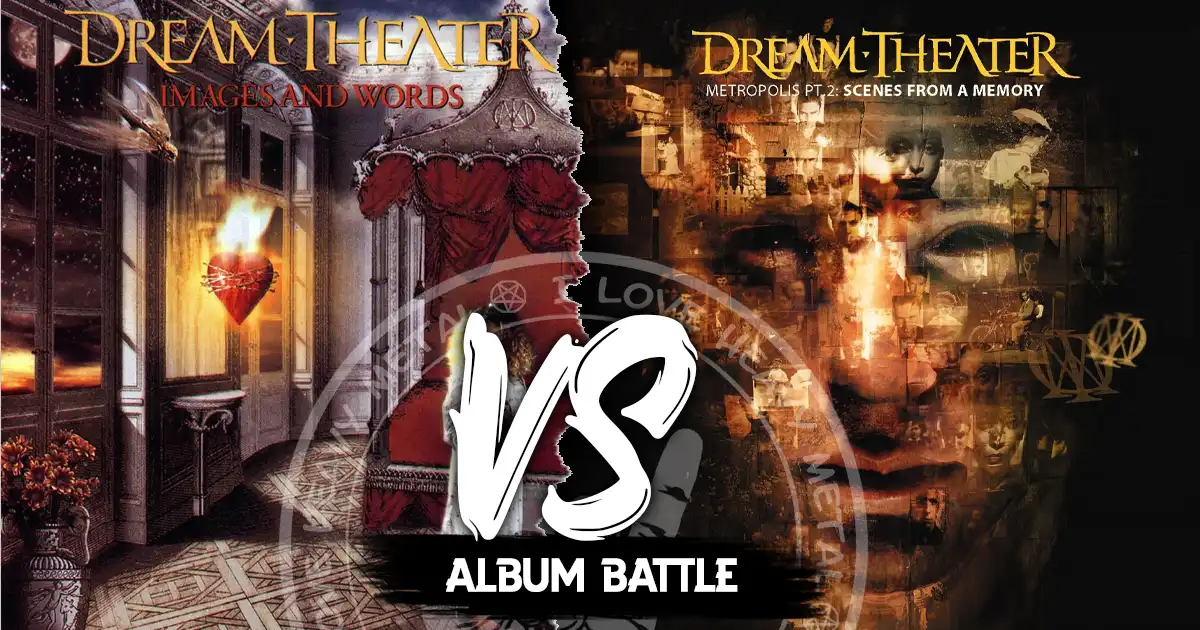
But even among their many great albums, two records always come up when fans talk about the band best work: “Images and Words” from 1992 and “Metropolis Pt. 2: Scenes from a Memory” from 1999.
One gave the band a huge breakthrough with songs that still get played again and again. The other took progressive metal into a full concept-album journey. Both are special, but they offer very different listening experiences.
“Images and Words”
Album “Images and Words” with James LaBrie, Kevin Moore, John Myung, John Petrucci and Mike Portnoy was released in 1992. That album was a big part of Dream Theater getting a much bigger audience and “Pull Me Under” was a big part of that.
It was their biggest mainstream hit, cracking the Top 10 on the rock chart and achieving RIAA Gold certification. But this album is much more than one hit.
“Take the Time” brings plenty of progressive twists without losing its hooks. “Another Day” shows a more melodic side, while “Metropolis – Part I: The Miracle and the Sleeper” gives us a taste of the musical complexity that would become such a big part of the band identity.
And then there’s “Learning to Live”, a track that brings together everything Dream Theater do so well. Powerful playing, changing moods and a strong sense of melody.
What makes “Images and Words” work so well is that the songs have their own identity. There is plenty of technical playing, but the album doesn’t feel like a competition to see who can play the fastest. The melodies stick, the songs have memorable moments and there is very little that feels like unnecessary padding.
Of course, some listeners feel that parts of the production haven’t aged perfectly, and a few arrangements can sound a little disjointed. But that hasn’t stopped this album from becoming one of the band’s most loved releases.
“Metropolis Pt. 2: Scenes from a Memory”
Seven years later, Dream Theater came back with something much bigger. “Metropolis Pt. 2: Scenes from a Memory” is not just a collection of songs. It’s a complete story, built around a psychological murder mystery, past-life regression and events connected to 1928.
The album follows a character exploring his past through hypnotherapy. As the story unfolds the music moves from one scene to another, with recurring themes and musical passages connecting everything.
This was also the first Dream Theater album to feature keyboardist Jordan Rudess, alongside LaBrie, Petrucci, Myung and Portnoy.
The opening “Overture 1928” sets the mood, while “Strange Déjà Vu” pulls you deeper into the story. “Home” is one of the album’s major highlights, and “The Spirit Carries On” brings a powerful emotional moment.
And if you want to hear just how far these guys can take their instruments, there’s “The Dance of Eternity”. Good luck keeping track of everything happening in that one!
The big strength of “Scenes from a Memory” is how the whole thing comes together. It feels like one long musical journey rather than separate tracks placed next to each other. But that’s also where some listeners have a problem. If you prefer albums where you can jump straight to your favorite songs, the concept and longer sections may not always work for you.
Still, there’s a reason this record is so often mentioned among the greatest progressive metal albums of the ’90s.
The Battle: Which Dream Theater Album Wins?
This is a tough one because both albums show Dream Theater at their best, just in different ways.
“Images and Words” has the big songs, memorable melodies and that special feeling of a band breaking through. “Scenes from a Memory” is more ambitious, more theatrical and built to be experienced from beginning to end.
One gives you “Pull Me Under” and “Learning to Live”. The other gives you “Home”, “The Spirit Carries On” and a whole story to get lost in.
So, let’s settle this one the metalhead way.
If you could keep only one, would you choose “Images and Words” or “Scenes from a Memory”?

 By
 By