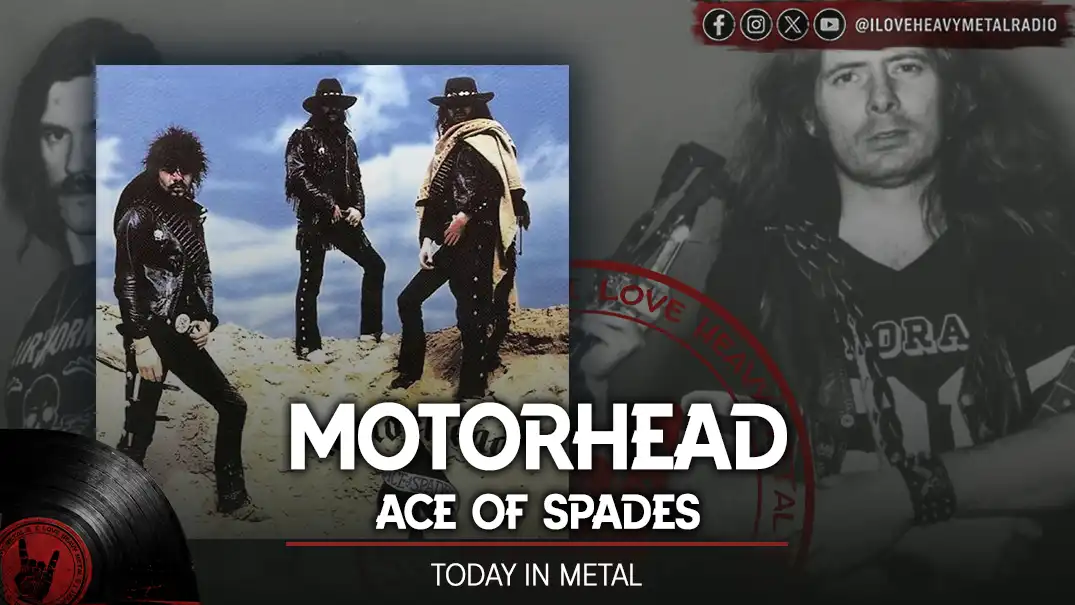

On November 8, 1980, Motörhead released an album that would permanently define the baseline for heavy metal attitude. “Ace of Spades” is a fast, violently loud, incredibly filthy and overflowing with snarl. There were no polished studio tricks or corporate pop aesthetics here. Just Lemmy, “Fast” Eddie Clarke and Philty Animal Taylor doing what they did best: destroying eardrums.
While the legendary title track immediately evolved into a global metal anthem, there is a hell of a lot more to this record than just one iconic bass intro. Unearthing the raw history behind the sessions makes the tracking list hit even harder.
Three Speed Freaks, One Unstoppable Record
The power-trio lineup is pure simplicity: Lemmy Kilmister handling the gritty vocals and heavily overdriven bass, “Fast” Eddie Clarke ripping on guitar and Phil “Philthy Animal” Taylor battering the drum kit. Helmed by producer Vic Maile, the entire record tears by in a blinding 36 minutes and 42 seconds. Not a single second of tape is wasted.
The album blasted its way to No. 4 on the UK Albums Chart, striking Gold status by March of 1981. Meanwhile, the titular single fought its way up to No. 15 on the UK Singles Chart.
Deep Cuts and Pure Attitude
Obviously, the title track is the massive elephant in the room. That opening bass rumble hits and you instantly know you’re about to get run over by a freight train. But the real meat of the record lies in the deeper cuts.
Take “(We Are) The Road Crew” a blistering, high-octane tribute to the unsung stagehands grinding behind the scenes while bands tour the world. Then you have “The Chase Is Better Than the Catch” which downshifts the tempo into a wonderfully dirty blues-rock groove. Throw in raw pieces like “Love Me Like a Reptile”, “The Hammer” and the aggressive velocity of “Jailbait”. It becomes incredibly clear that this band had no intention of letting the pressure off the listener.
Lemmy, Gambling Metaphors, and a Two-Year Mistake
The overarching theme of the record is completely drenched in card tables, dice rolls, and the high-stakes, hard-living persona that defined the band’s aesthetic. Historically, the ace of spades was viewed as a visual omen of terrible luck. Motörhead collectively adopted it as their ultimate crest under a simple philosophy. If bad luck was going to stalk them anyway, they might as well wear it on their sleeves.
Lyrically, the song directly references the infamous “dead man’s hand” a pair of aces and eights famously held by Western gunslinger Wild Bill Hickok when he was assassinated mid-poker game back in 1876.
But the absolute best piece of trivia here is Lemmy’s own hilarious vocal slip-up. He later admitted in interviews that during chaotic live gigs, he accidentally sang “the eight of spades” instead of “the ace of spades” for two whole years before a single soul ever noticed the mistake!
Written in the Time it Takes to Drink a Pint
One of the most beloved anthems on the record, “(We Are) The Road Crew” was scribbled down by Lemmy in a mere ten minutes. He understood that brutal, unglamorous lifestyle intimately, having spent a chunk of his early years working as a roadie for none other than Jimi Hendrix. It’s a beautifully raw salute to the crew who work in the dark, far away from the stage lights.
The Fake British Desert
Everyone knows the iconic, cowboy-themed album art featuring the trio standing defiantly amidst a vast, sun-baked desert landscape. Well, the rock-and-roll magic trick here is hilarious: the photos weren’t shot in the American West or the Sahara. The band actually posed in a cold, dreary sandpit located in North London. They simply wore canvas gear and relied on smart photography angles to pull off the illusion.
The Blueprint of Speed Metal
Ultimately, “Ace of Spades” fused the raw velocity of late-70s UK punk with the crushing weight of hard rock, laying down the fundamental bricks that would later build speed and thrash metal. Lemmy didn’t need elaborate speeches or deep artistic manifestos to explain what rock ‘n’ roll was. He just turned his amplifiers all the way up and let the music do the talking.
So, where do your loyalties lie on this record? Are you sticking strictly with the legendary title track, or is there a specific, dirty deep-cut that always gets your fist in the air? Drop your favorite track in the comments below!

 By

 By