
September 28th is one of those dates where metal history gets seriously interesting.
Black Sabbath were fighting their way through one of the most chaotic periods of their career. Ozzy Osbourne was preparing for a new chapter with a young guitarist who would become a legend. And Guns N’ Roses were about to unleash one of the songs that perfectly captured the dangerous energy of late-’80s rock.
Three releases. Three very different stories. And behind all of them, some seriously good metal trivia.
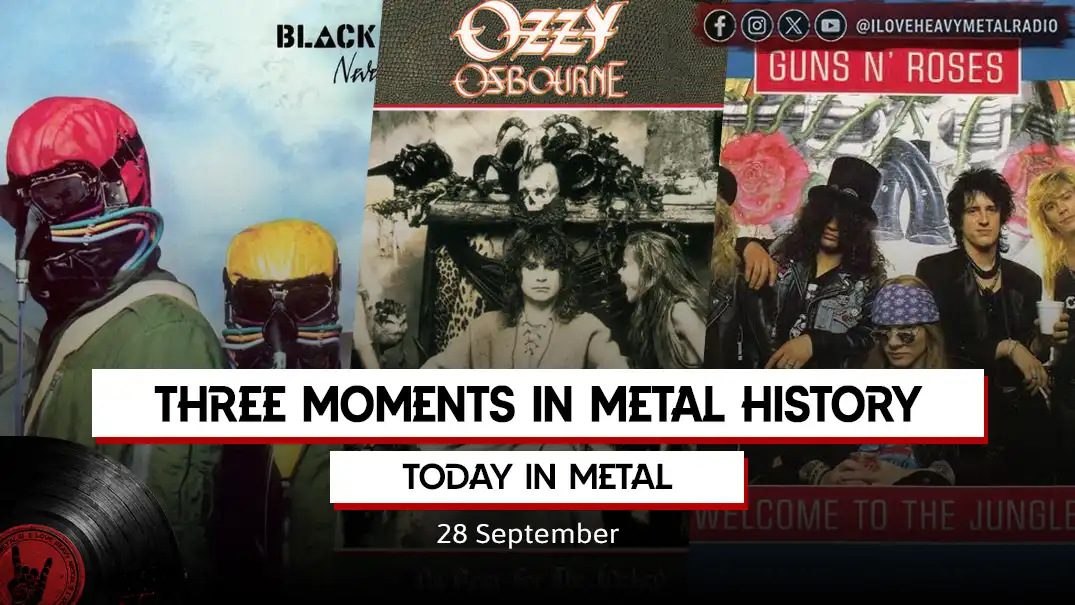
Black Sabbath – “Never Say Die!” (1978)
Released on September 28th, 1978, “Never Say Die!” was the final Black Sabbath studio album featuring Ozzy Osbourne, Tony Iommi, Geezer Butler and Bill Ward until the original lineup reunited decades later for “13”.
And getting the album made was anything but easy.
Before recording even started, Ozzy had quit the band. Sabbath brought in Dave Walker, formerly of Savoy Brown and Fleetwood Mac and the temporary lineup even performed an early version of “Junior’s Eyes” on the BBC program Look! Hear!
Then Ozzy returned just days before the band entered the studio.
That created another problem: Ozzy refused to sing lyrics or melodies that had been written with Walker. With the clock ticking, Geezer Butler had to rewrite almost the entire album lyrics, reportedly working under intense pressure in the freezing Toronto studio.
Even Bill Ward ended up stepping behind the microphone. Ozzy refused to sing “Swinging the Chain” so Ward took lead vocals on the closing track one of the rare occasions where Sabbath legendary drummer handled lead vocals.
And then there was the tour.
Looking for a support band that wouldn’t overshadow them, Ozzy requested a relatively unknown California “bar band” to open for Black Sabbath. That band was Van Halen. With Eddie Van Halen guitar work and David Lee Roth stage energy, the young band reportedly stole the spotlight from the exhausted headliners night after night.
Even the album title reflected the band situation. “Never Say Die!” became a kind of desperate mantra during a period when Black Sabbath were dealing with serious internal tension and substance abuse.
And that strange, instantly recognizable cover? It came from Hipgnosis, the famous design group known for their work with Pink Floyd. The design had originally been presented to Pink Floyd for Wish You Were Here, but after they rejected it, it was repurposed for Sabbath.
Not exactly the easiest album to make but that’s part of what makes “Never Say Die!” such a fascinating chapter in Black Sabbath history.
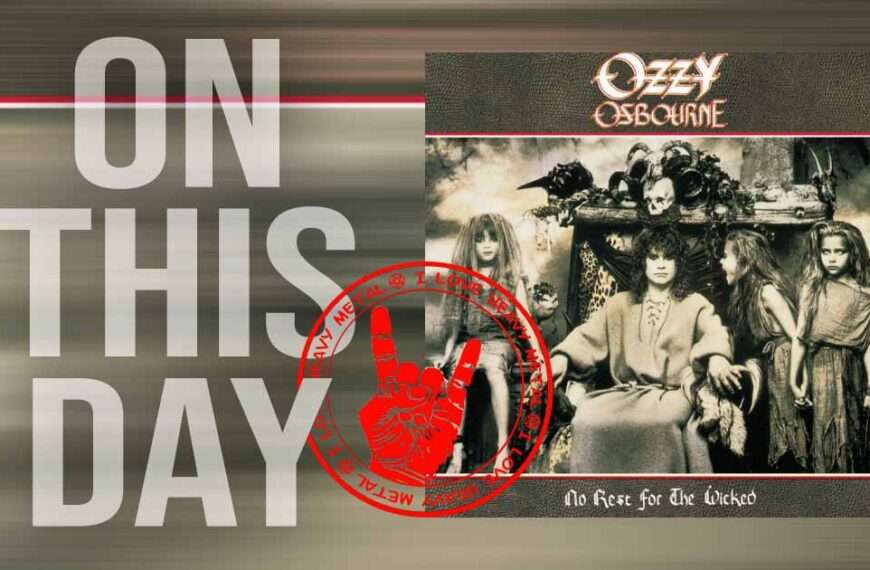
Ozzy Osbourne – “No Rest for the Wicked” (1988)
Ten years later, Ozzy was starting another chapter.
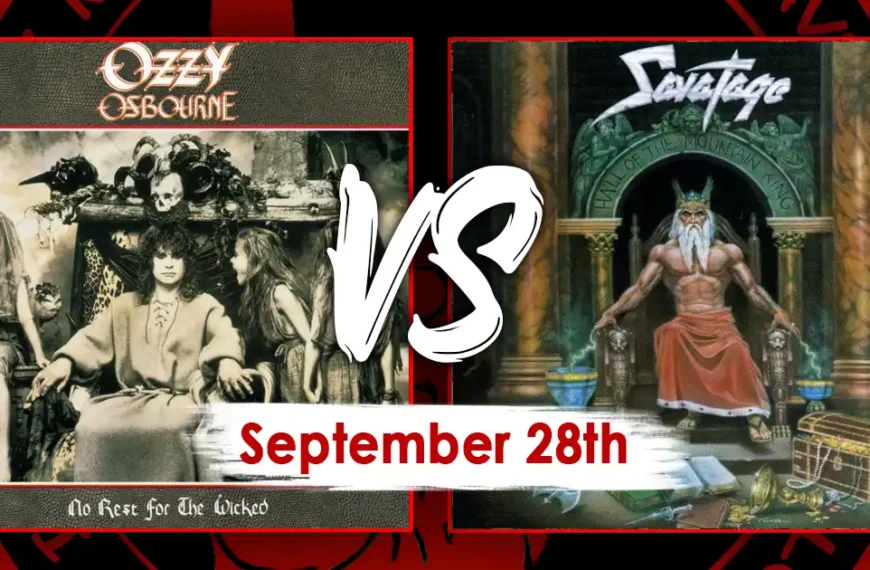
Released on September 28th, 1988, “No Rest for the Wicked” brought a heavier, nastier energy to Ozzy sound and introduced a guitarist who would become one of the most recognizable figures in metal: Zakk Wylde.
Wylde was just 21 and working as a gas station attendant in New Jersey when Ozzy received his demo tape. His aggressive riffs, pinch harmonics and wild playing immediately gave the album a new edge.
It was the beginning of a legendary musical partnership.
The album also contains “Miracle Man” Ozzy’s direct attack on TV evangelist Jimmy Swaggart. Swaggart had publicly criticized Ozzy music and after his highly publicized 1988 scandal, Ozzy turned the situation into ammunition for the song and video.
Then there’s “Hero”.
The track was completely unlisted on the original 1988 vinyl and cassette releases, meaning early listeners could be surprised when the album continued playing after “Demon Alcohol” appeared to be the final track.
“Bloodbath in Paradise” brought another strange Ozzy touch. The track, written about the Charles Manson family crimes, contains a backwards vocal message referencing The Exorcist — one of Ozzy favorite horror movies.
And behind the scenes, the album had its own unusual lineup story. Bob Daisley returned to record bass and co-write material, only to leave again after the studio work was completed. For the promotional period and tour, Geezer Butler stepped in.
But for metal fans, the biggest moment may still be the arrival of Zakk Wylde.
A young guitarist walked into Ozzy world and history was being made.
Guns N’ Roses – “Welcome to the Jungle” (1987)
On September 28th, 1987, Guns N’ Roses released “Welcome to the Jungle” the second single from “Appetite for Destruction”.
It didn’t exactly sound like the polished rock dominating the era.
Raw, dirty, dangerous and packed with attitude, the song immediately showed what made the Appetite-era Guns N’ Roses lineup so explosive.
The story behind it is just as memorable.
Axl Rose famous “You know where you are?” line came from a real encounter he had as a teenager. After hitchhiking to New York City from Indiana, he was confronted by a homeless man who shouted the words at him.
And despite sounding like the ultimate Los Angeles anthem, the song was actually written in Seattle. Axl used the distance to reflect on the chaotic and predatory side of Los Angeles that the band encountered after arriving on the Sunset Strip.
The music itself came together incredibly quickly. Slash had a basic riff he had been working on acoustically, played it for Axl, and within about three hours the band had developed the arrangement.
Then MTV nearly stopped it from reaching a wider audience.
The network initially refused to play the video because of the band aggressive image. Eventually, it was given a single 4:00 AM Sunday airing.
Rock fans had other ideas.
The response was so strong that the video moved into heavy rotation, helping push Guns N’ Roses toward the mainstream.
And there’s a great little studio detail hiding in Slash famous opening riff. The eerie echo wasn’t simply a guitar pedal producer Mike Clink used a Roland SRV-2000 digital reverb unit and matched the delay to Slash picking.
The result became one of the most recognizable openings in rock.
Three Different Sounds. One Metal-Heavy Date.
September 28th takes us from the turbulent final chapter of Black Sabbath original Ozzy era, to Ozzy explosive reunion with a young Zakk Wylde and finally to Guns N’ Roses tearing through the door with “Welcome to the Jungle”.
Three moments. Three completely different kinds of chaos.
And that’s exactly why we keep digging through metal history.
What are you spinning today? 🤘

 By
By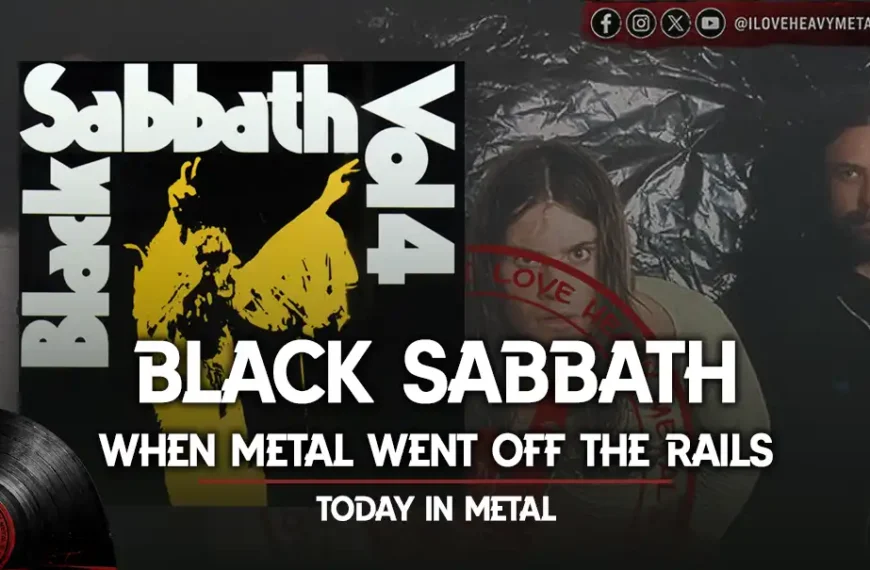
 By
By