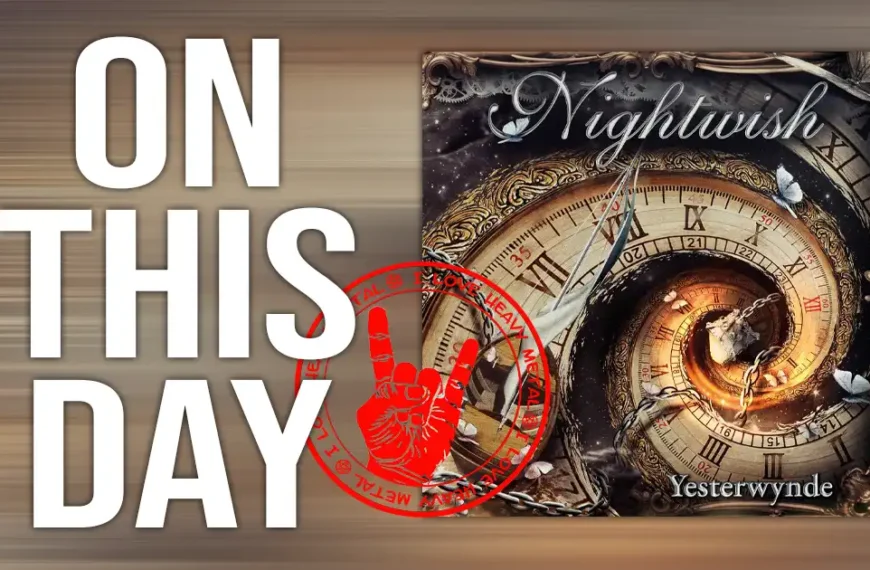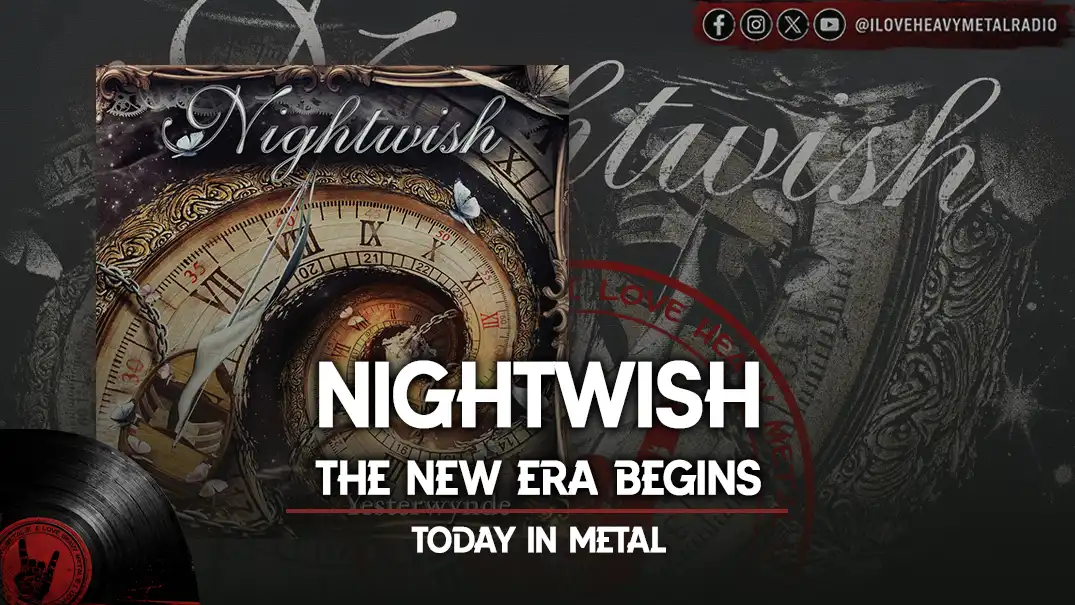

Nightwish have never been afraid of changing.
But Yesterwynde might be one of their most interesting changes yet.
The album arrived as a new chapter for the Finnish symphonic metal giants! Heavier, cinematic and packed with enormous orchestral arrangements, while also leaving plenty for longtime fans to argue about.
Critics largely welcomed it as a return to form after Human. :II: Nature. praising its heavier sound, cohesion and the way Tuomas Holopainen finally gave Floor Jansen the space to unleash the full range of her voice.
The fan reaction?
Much more complicated.
And honestly, that’s what makes Yesterwynde worth talking about.
Floor Jansen Finally Gets the Spotlight
One of the biggest talking points around Yesterwynde is Floor Jansen.
Critics repeatedly praised the album for finally taking advantage of everything she can do powerful metal vocals, softer emotional passages, dramatic theatrical delivery and everything in between.
Tracks such as the nine-minute “An Ocean of Strange Islands” bring back some of the grandeur associated with classic Nightwish records like Oceanborn, Once and Dark Passion Play.
The production is enormous too.
There is so much happening inside these songs that Yesterwynde feels less like something you simply play in the background and more like something you have to sit down and explore.
Headphones recommended.
But Where Is Marko?
For many longtime Nightwish fans, there is one obvious absence.
Yesterwynde is the band first studio album in 22 years without Marko bass playing and unmistakable aggressive male vocals.
Jukka Koskinen handles bass brilliantly, but he was never going to simply replace what Marko brought vocally.
Instead, Troy Donockley takes on a larger male-vocal role, particularly on songs such as “Sway” and “Hiraeth”.
For some fans, that works. For others, something essential is missing.
And that’s probably impossible to avoid when a voice as recognizable as Marko disappears from a band.
The Album Title Isn’t Even a Real Word
Here’s where things get very Nightwish.
“Yesterwynde” isn’t an actual word.
Tuomas Holopainen invented it to describe a feeling involving nostalgia, the passing of time and the connection between us and the countless people who lived before us.
A strange word for a strange feeling. And that idea runs throughout the album.
But it also became one of the major criticisms from fans.
Some listeners felt that Nightwish were revisiting the same scientific, evolutionary and human-history themes already explored on Endless Forms Most Beautiful and Human. :II: Nature.
For those fans Yesterwynde feels less like a new chapter and more like another page from the same book.
Then Nightwish Gets Weird
Not everything follows the classic symphonic-metal formula.
“The Day Of…” and “The Children of ‘Ata” bring more prominent electronic sounds and dance/disco-inspired rhythms into the mix.
And this is where the fanbase really starts arguing. Some listeners appreciate Nightwish continuing to experiment.
Others hear these moments and wonder what happened to the metal. But experimentation has always been part of the band identity.
Whether you love these tracks or skip them, they’re certainly not playing it safe.
“The Children of ‘Ata”
One of the album most fascinating songs is inspired by a real story.
In 1965, six Tongan schoolboys were shipwrecked on the deserted island of ‘Ata, where they survived for 15 months through cooperation and friendship.
The story became a fascinating counterpoint to the darker survival narrative of Lord of the Flies.
And that’s very much in line with Yesterwynde taking something from history, science or human experience and turning it into a Nightwish sized piece of music.
The Wintersun Connection
There’s also a cool connection hiding in the rhythm section.
Jukka Koskinen and drummer Kai Hahto had already spent roughly two decades playing together in Finnish melodic death metal band Wintersun.
Now they’re providing the foundation for one of the world biggest symphonic metal bands.
That experience gives the album low end a particularly tight and aggressive character.
And for Jukka Yesterwynde is a major milestone: his first Nightwish studio album as an official member after previously joining as a live session musician.
Floor Recorded the Album After Giving Birth
The recording process was unusual too.
Floor Jansen missed the initial rehearsals because of her second pregnancy and the exhaustion surrounding it.
The choir and orchestral arrangements were recorded before she had tracked her vocals.
She eventually recorded her parts in a home studio in Sweden alongside her husband, Sabaton drummer Hannes Van Dahl, shortly after giving birth.
Considering how enormous her vocal performance sounds on the finished record, that’s an impressive story behind the album.
Goodbye, Giant Finale
For more than two decades Nightwish had developed a tradition of ending albums with enormous closing epics.
Century Child had “Beauty of the Beast”.
Once had “Ghost Love Score”.
Endless Forms Most Beautiful had “The Greatest Show on Earth”.
Yesterwynde says goodbye to that tradition.
Instead, the album closes with “Lanternlight”.
It’s delicate, intimate and introspective rather than another 10-to-20-minute symphonic monster.
Even more interestingly, it loops back toward the quiet sounds that open the album.
No giant finale. No fireworks. Just a quiet ending.
A New Nightwish Era?
That’s probably the biggest question surrounding Yesterwynde.
The album has the huge orchestras, cinematic atmosphere and progressive songwriting Nightwish fans expect.
But it also has a new rhythm section, no Marko Hietala, a bigger role for Troy vocals, electronic experiments and a different approach to the album overall structure.
Critics largely heard a heavier, more cohesive Nightwish.
Fans heard something more complicated. Some found it beautiful and immersive.
Others felt the themes were becoming repetitive or missed the chemistry of the old lineup. And somewhere in between those reactions is what makes Yesterwynde interesting.
It isn’t trying to recreate Once. It isn’t trying to become Human. :II: Nature. It’s another step in the strange evolution of Nightwish.
So where do you stand?
Is Yesterwynde a powerful return to Nightwish heavier side or has the band moved too far away from the sound that made you fall in love with them?
And most importantly: which Nightwish era does it belong to? 🤘


 By
By
 By
By

 By
By