
In 1986 thrash metal was getting faster, heavier and more dangerous.
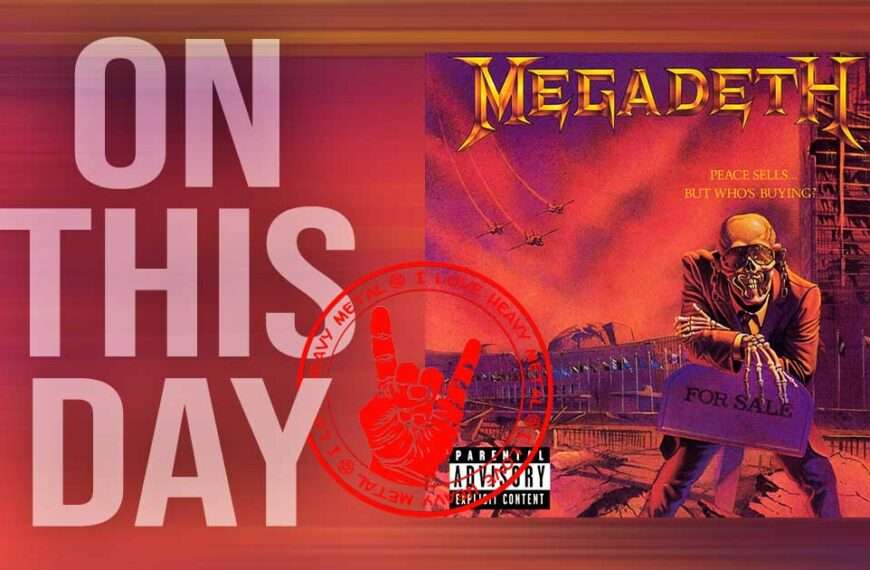
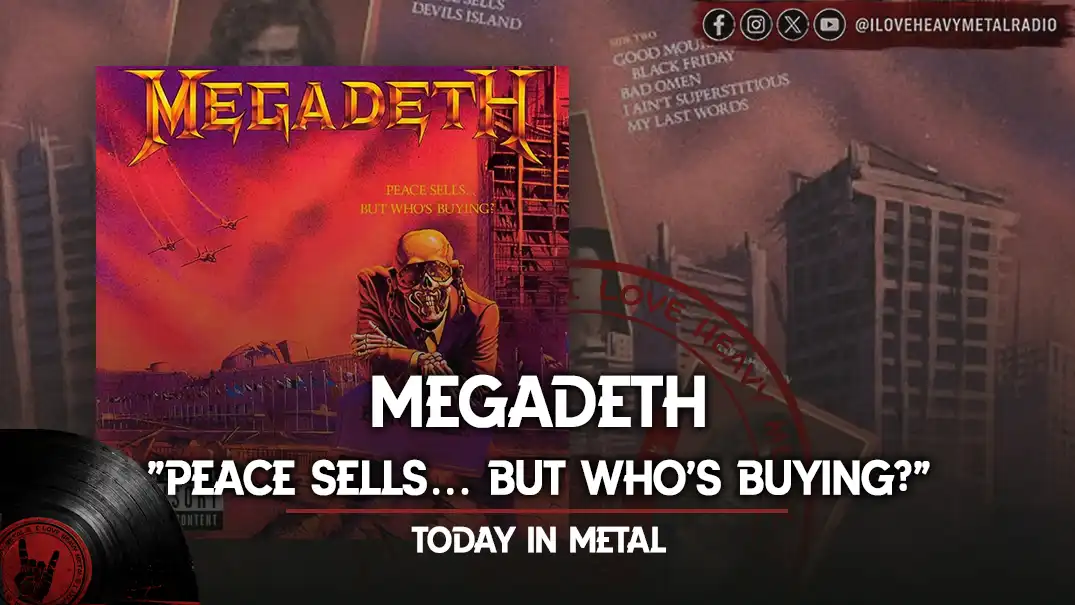
Then Megadeth dropped Peace Sells… But Who’s Buying?
Released alongside albums like Master of Puppets and Reign in Blood, Megadeth second album took the chaotic aggression of their debut and sharpened it into something far more precise.
The riffs became tighter, the playing became crazier. And Dave Mustaine had plenty to say.
Peace Sells… But Who’s Buying? wasn’t simply fast metal. It was cynical, technical, politically charged and occasionally downright sinister.
And it still sounds like Megadeth trying to start a fight with the entire world.
When Thrash Got Weird
One of the album biggest strengths is the tension between brutal thrash metal and the musicians’ jazz-fusion backgrounds.
Guitarist Chris Poland and drummer Gar Samuelson brought an unusual musical vocabulary into the band.
The result?
Odd rhythmic turns, winding guitar lines, unexpected tempo changes and solos that seemed determined to go somewhere you weren’t expecting.
“Wake Up Dead” launches the album with frantic riffing and shifting guitar harmonies, while “Good Mourning / Black Friday” moves from an eerie, atmospheric opening into an absolute speed-metal assault.
Mustaine snarling vocals sit right in the middle of it all.
He doesn’t sound polished. He sounds dangerous.
“Peace Sells” – The Bassline Everyone Knows
Then comes “Peace Sells”.
That opening David Ellefson bassline is one of the most recognizable moments in thrash metal.
And it became even more famous when MTV News used it as theme music for nearly a decade.
There’s an ironic twist: Mustaine claimed Megadeth never received royalties for the use because MTV treated the riff as a short sound bite rather than broadcasting the full song.
Whatever the accounting situation, the result was undeniable. A metal bassline had become part of mainstream television.
And the song itself was pure Megadeth cynical, sarcastic and aimed straight at hypocrisy and the establishment.
The Dark Side of Megadeth
Not everything on Peace Sells is political.
“The Conjuring” and “Bad Omen” take the band into much darker territory, with occult themes and a sinister atmosphere that became an important part of Megadeth early identity.
“The Conjuring” has an especially strange history.
Mustaine refused to perform it live for more than 15 years because he believed the lyrics contained functional occult rituals and hexes. He later spoke about regretting his youthful involvement with the occult and its influence on his life.
The song eventually returned to the setlist in 2018. Imagine writing a song so dark that you don’t want to play it for 15 years.
That’s very Megadeth.
“Wake Up Dead” Almost Had No Ending
“Wake Up Dead” contains another fascinating piece of the album history.
Mustaine reportedly didn’t have enough lyrics to fill the entire arrangement.
Instead of stuffing extra words into the song, the band simply let the music take over.
The final section becomes an extended instrumental attack filled with guitar work and solos.
And honestly? It works.
Sometimes the best solution to a missing lyric is just more riffs.
The Guitars Were Literally Disappearing
The recording sessions were happening while the band was dealing with serious substance-abuse problems.
According to the story surrounding the album Chris Poland was so deep into his addiction that he sold the band guitars and studio equipment behind Mustaine back to fund it.
Mustaine eventually discovered the equipment in a local pawn shop and bought it back.
That’s not exactly the glamorous version of rock ‘n’ roll. It’s the ugly side.
And somehow, this chaotic period produced one of the most influential records in thrash metal.
A Little Sinatra History
The album only cover “I Ain’t Superstitious” goes back to blues songwriter Willie Dixon.
But Megadeth version was influenced by Jeff Beck 1968 interpretation rather than simply copying the original.
The track was recorded at Hollywood’s Capitol Records Tower a studio strongly associated with Frank Sinatra and generations of legendary recordings.
So yes, somewhere inside this furious thrash album is a strange little connection between Megadeth, Jeff Beck, Willie Dixon and Sinatra.
Metal history gets weird.
The Classic Lineup
Peace Sells… But Who’s Buying? captured one of the most distinctive early Megadeth lineups:
- Dave Mustaine – vocals, lead/rhythm guitars, acoustic guitar
- David Ellefson – bass, backing vocals
- Chris Poland – lead/rhythm guitars
- Gar Samuelson – drums, percussion
Poland jazz-influenced guitar playing and Samuelson fusion background gave the album an unpredictable edge, while Ellefson bass became absolutely essential to its identity.
And Mustaine?
He was building the Megadeth sound around sharp riffs, venomous lyrics and an attitude that never seemed interested in playing nice.
The Album That Made Megadeth Dangerous
Peace Sells… But Who’s Buying? is one of those records where almost every song has something going on.
“Peace Sells” has the legendary bassline.
“Wake Up Dead” has the frantic technical attack.
“Good Mourning / Black Friday” gives you the epic, multi-part experience.
“The Conjuring” brings the darkness.
And underneath all of it is a band that sounded like it was operating on pure chaos, even when the musicianship was incredibly precise.
That’s the magic. The album isn’t polished into submission.
It’s sharp, unpredictable and hungry.
More than anything, it sounds like Megadeth becoming Megadeth.
And in a year packed with legendary thrash releases, that’s saying something.
So let’s settle it: is Peace Sells… But Who’s Buying? Megadeth ultimate thrash classic and which track are you playing first? 🤘

 By
By
 By
By


 By
By