
Progressive metal can be full of crazy time changes, long solos and musicians trying to prove how much they can play. But what happens when a band decides that the songs matter more than showing off?
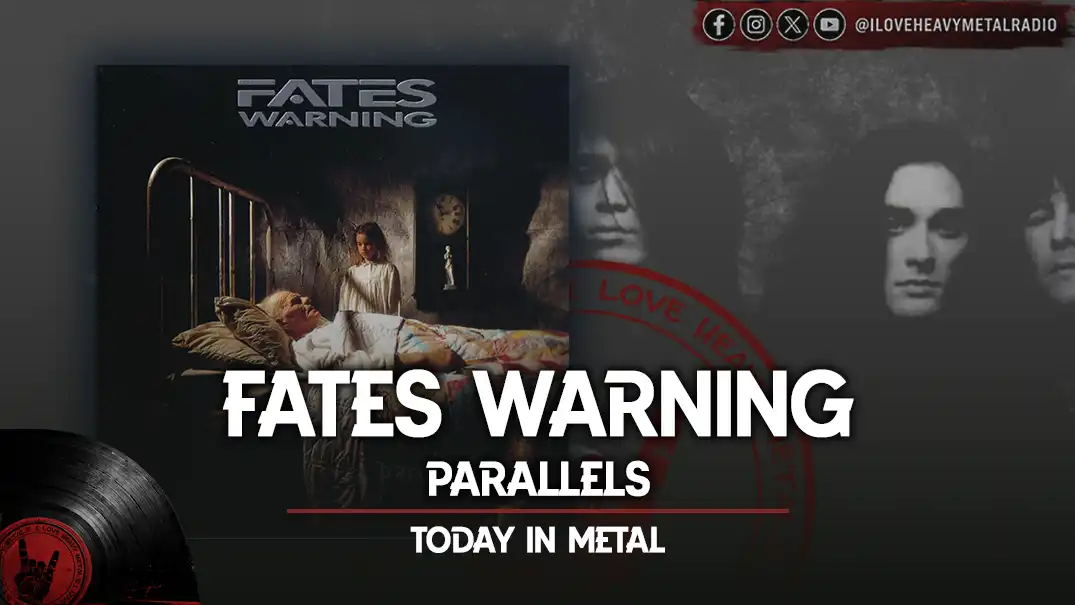
Fates Warning answered that question with “Parallels” released on October 29, 1991 through Metal Blade Records.
Their sixth studio album took a different path from “Perfect Symmetry”. The band kept their technical edge, but the songs became much more melodic, the structures were more direct and the choruses stuck in your head. It was definitely a shift in direction, but it wasn’t a move away from progressive metal.
And the band had a few surprises hidden between those riffs.
Progressive Metal With Hooks
Produced by Terry Brown, known for his work with Rush, alongside Brian Slagel, “Parallels” gave Fates Warning a cleaner, punchier sound. Jim Matheos still built clever guitar parts, while Mark Zonder’s drumming kept the music moving in unexpected directions.
The difference was in how everything came together. Instead of turning every solo into a complex technical workout, Jim Matheos focused on melodies that fit the songs. You can really hear the influence of guys like Alex Lifeson from Rush and Chris DeGarmo from Queensrÿche in his style.
That didn’t mean the band had suddenly forgotten how to play.
“Point of View” became one of the album’s standout tracks, with a memorable heavy riff, Zonder’s dynamic drumming, and a guitar solo from Matheos that gives the song its own identity. It also helped bring Fates Warning to a wider audience through radio and MTV.
Then there’s “Eye to Eye” a melodic metal track that showed another side of the band. Along with “Point of View” it helped make “Parallels” a good starting point for listeners curious about progressive metal but unsure where to begin.
The album still had room for something bigger. “The Eleventh Hour” runs for eight minutes, shifting through different musical sections while Ray Alder pushes his vocals to powerful heights. It’s proof that the band hadn’t traded its progressive roots for simple radio rock.
And if you want a more emotional moment, “We Only Say Goodbye” brought a power-ballad side to the record, while “The Road Goes on Forever” closed things on a melodic note.
Dream Theater, You’re Welcome… or Not?
One of the best stories connected to “Parallels” has nothing to do with the music itself.
Fates Warning included a thank-you to their fellow progressive metal band Dream Theater in the album’s liner notes. There was just one problem: they spelled the name “Dream Theatre”.
Dream Theater apparently didn’t let that one pass. On their next release, “Images and Words”, they returned the favor by thanking their tour mates as “Fatez Warning”.
A small typo turned into one of prog metal’s funniest inside jokes. Both bands could handle complicated music, but apparently spelling each other’s names correctly was a different challenge.
There’s also a connection between the two bands that goes beyond the joke.
James LaBrie had just joined Dream Theater around the time “Parallels” was recorded. He contributed guest backing vocals to “Life in Still Water” giving his voice a place on the album before his major breakthrough with Dream Theater.
It’s a cool detail that makes this record even more interesting for fans of both bands.
A Wider Sound, Even in 1991
Fates Warning also experimented with QSound an audio processing technique designed to make stereo recordings sound wider and deeper. The idea was to create a more immersive listening experience and the band was among the early metal acts to use it.
The album actually made it to No. 20 on the Billboard Heatseekers chart. Because it was a bit easier to listen to, it helped bring in a ton of new fans who found their older albums a little too hard to swallow.
Years later, in 2010, Metal Blade put out a deluxe edition packed with a remastered version of the album, live tracks, early demos, a band documentary and a full concert filmed in New Haven, Connecticut, back in February 1992.
More than anything “Parallels” shows that progressive metal doesn’t have to choose between technical skill and songs people want to hear again. The riffs stick, the melodies stay with you and the longer tracks still reward listeners who pay attention.
What’s your pick from “Parallels”? “Point of View”, “The Eleventh Hour” or “Life in Still Water”? 🤘


 By
 By