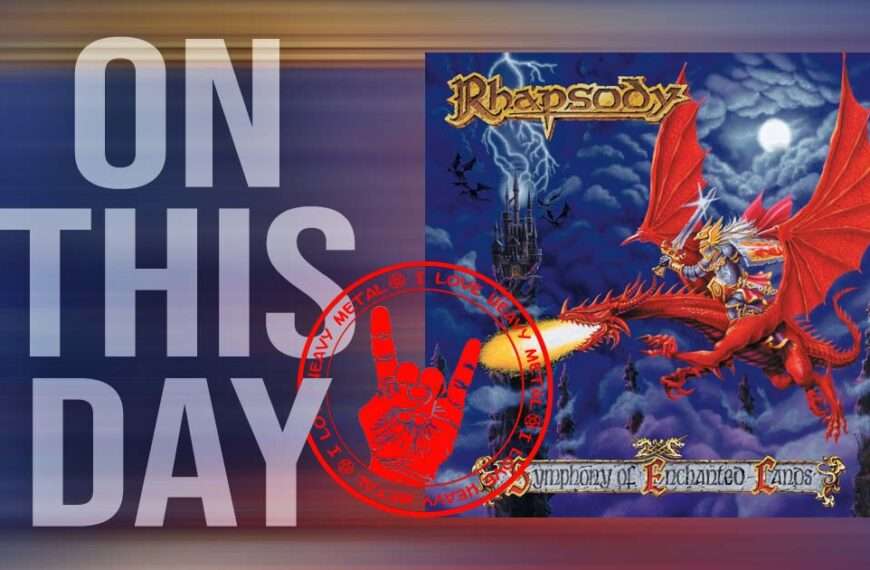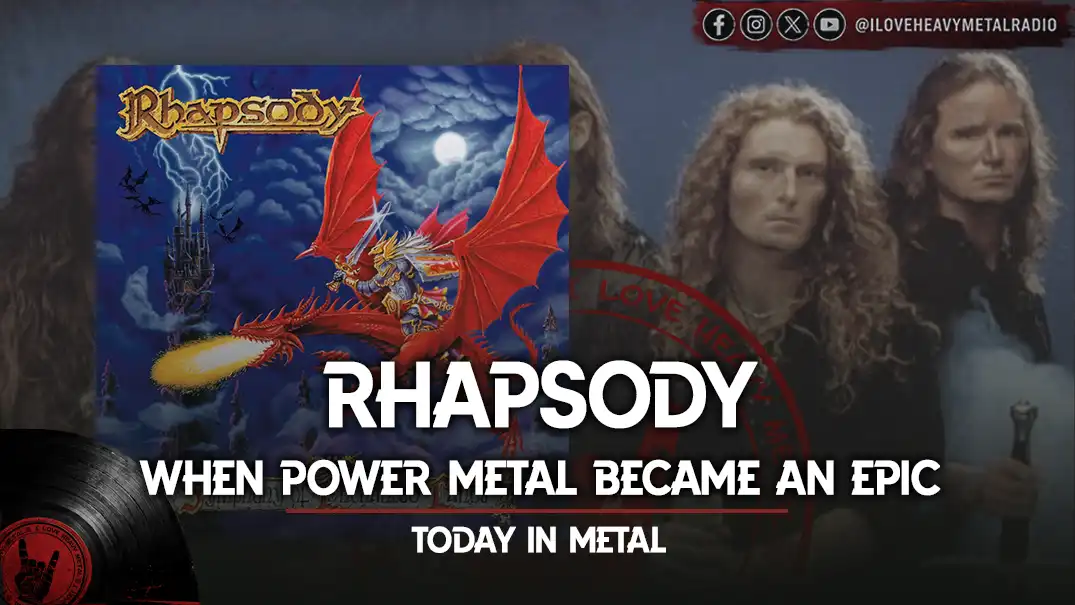

In 1998, Rhapsody took power metal somewhere far beyond castles, dragons and blazing guitars. With “Symphony of Enchanted Lands” the Italian band turned the Emerald Sword Saga” into a full-blown metal fantasy packed with orchestras, choirs, neoclassical shredding and enough drama to make every song feel like the soundtrack to an epic quest.
Released as the band second studio album “Symphony of Enchanted Lands” continued the story of Loregard, the hero at the center of Rhapsody fantasy universe and his quest involving the magical dragon Tharos.
And musically, Rhapsody clearly wasn’t interested in playing small.
Power Metal Meets Classical Fantasy
The album combines high-speed power metal with Luca Turilli neoclassical guitar work, Alex Staropoli keyboards, full orchestral arrangements, medieval folk touches and operatic choirs.
The result is theatrical, melodic and unapologetically over-the-top.
“Emerald Sword” is the obvious battle cry fast, catchy and built around a huge chorus that would become one of Rhapsody live staples. “Wisdom of the Kings” keeps the momentum going with energetic melodies and the kind of high-fantasy atmosphere that became central to the band identity.
Then comes the title track.
At 13 minutes and 17 seconds, “Symphony of Enchanted Lands” is practically its own adventure. The multi-part epic moves through progressive structures, orchestral passages and theatrical storytelling, opening with an operatic performance from Fabio Lione and featuring spoken narration from American voice actor Sir Jay Lansford.
And yes, Rhapsody goes all in.
An Entire Orchestra Behind the Metal
The core lineup featured Fabio Lione on vocals, Luca Turilli on electric and acoustic guitars, Alex Staropoli on keyboards, Alessandro Lotta on bass and Daniele Carbonera on drums and percussion.
But the album sound goes far beyond those five musicians.
Rhapsody brought in Russian choirs, a full string ensemble, harpsichord players and baroque wind instrumentalists, creating a massive classical layer around the metal foundation.
The neoclassical arrangements also reveal a strong connection to classical music, with Antonio Vivaldi among the major structural influences behind the fast guitar and keyboard passages.
It’s power metal, but with the volume turned all the way up on the fantasy.
The First Rhapsody Ballad
Not everything is about speed and orchestration.
“Wings of Destiny” marked Rhapsody first piano-based ballad, giving the album a quieter and more emotional moment among all the battles, dragons and soaring guitar work.
That contrast helps the album breathe before it returns to its larger-than-life musical world.
Masterpiece or Too Much Fantasy?
This is where “Symphony of Enchanted Lands” becomes interesting.
For many fans, the album represents one of the high points of 90s symphonic power metal. The musicianship is ambitious, Turilli solos are a major attraction and Staropoli orchestration gives the record a huge cinematic personality.
But the same things that make the album special can also be its biggest weakness.
The fantasy clichés are everywhere. The narrative voiceovers can feel excessive. And some listeners feel that the orchestral layers occasionally become detached from the metal underneath, contributing to a bloated feeling in parts of the record.
There’s also the eternal Rhapsody fan debate: “Symphony of Enchanted Lands” or “Legendary Tales”?
There is no shortage of opinions.
The Emerald Sword Saga Continues
The album is the second chapter of Rhapsody‘s “Emerald Sword Saga”, following Loregard, the Son of Holy Ice, on his quest.
The title track itself even contains a melody that would resurface years later in 2002’s The Pride of the Tyrant.
And Rhapsody history didn’t stop with this album. The band had originally been known as Thundercross between 1993 and 1995 before becoming Rhapsody. In 2006, the name was expanded to Rhapsody of Fire because of a trademark/copyright issue.
But in 1998, the identity was already clear.
Rhapsody were building a world where speed metal, classical music, fantasy storytelling and huge orchestration could exist on the same record.
“Symphony of Enchanted Lands” didn’t simply continue the Emerald Sword Saga.
It made the journey feel enormous.
The big question: is this Rhapsody masterpiece or does “Legendary Tales” still wear the crown?

 By
By