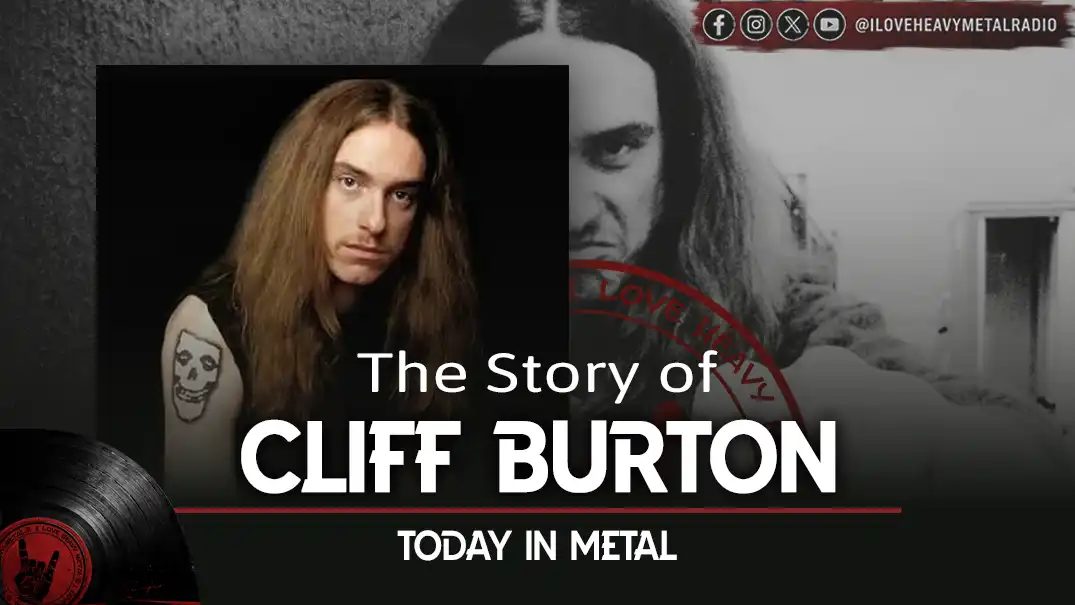

The Bassist Who Changed Metal
Clifford Lee Burton wasn’t just Metallica bassist. He changed what a bassist could be in heavy metal.
Born on February 10th, 1962, Burton picked up the bass at 13 after the loss of his older brother, making a vow to become the best bassist he could possibly be. He studied music theory in college and brought influences ranging from J.S. Bach and Rush to punk rock into his playing.
In 1982, James Hetfield and Lars Ulrich saw Burton performing with Trauma in Los Angeles. His explosive, effects-heavy bass solo immediately caught their attention. They wanted him in Metallica but Cliff had one condition: the band had to leave Los Angeles and move to the San Francisco Bay Area. They did, setting up in El Cerrito.
And metal was never quite the same again.
Burton treated the bass as more than a rhythm instrument. Distortion, wah-wah, classical harmonies and aggressive playing became part of his signature sound.
“(Anesthesia) – Pulling Teeth” turned a bass solo into a full-blown metal assault. The opening of “For Whom the Bell Tolls” sounds like a guitar riff, but it is Burton distorted bass. And on “Orion” he helped create one of Metallica most ambitious instrumental pieces, including its unforgettable harmonies and bass passages.
Behind the music was a bassist with plenty of personality.
Cliff famously ignored the typical 1980s metal uniform, preferring bell-bottom jeans and denim. He also had a strange pre-show tradition: wearing mismatched socks.
Then there was his battered 1972 Volkswagen Variant, nicknamed the “Green Grenade” which he used to haul his bass cabinets around. The car was so rusty that he covered holes in the floor with road signs and pieces of wood.
Even his bass had secrets. His modified Rickenbacker 4001 reportedly featured a hidden Seymour Duncan guitar pickup, helping him achieve some of the screaming, aggressive tones that became part of his identity.
But perhaps the darkest story surrounding Cliff is the one connected to the night he died.
On September 26th, 1986, while Metallica were touring Europe, Cliff and Kirk Hammett drew cards to decide who would get the better bunk. Cliff won and chose Kirk bunk.
Hours later, on September 27th, the tour bus crashed near Dörarp, Sweden.
Cliff Burton was 24 years old.
His death became one of the most heartbreaking moments in metal history. But his music never disappeared. Metallica later incorporated some of his unused ideas and a written poem into “To Live Is to Die” on ...And Justice for All.
In 2009, Burton was posthumously inducted into the Rock and Roll Hall of Fame with Metallica.
Only three studio albums captured Cliff Burton with Metallica – Kill ‘Em All, Ride the Lightning and Master of Puppets.
Three albums were enough to leave a mark that still echoes through metal.
Cliff Burton didn’t simply play bass.
He made the bass sound like it could lead the charge.


 By