
Did “Slaughter of the Soul” Deserve It?
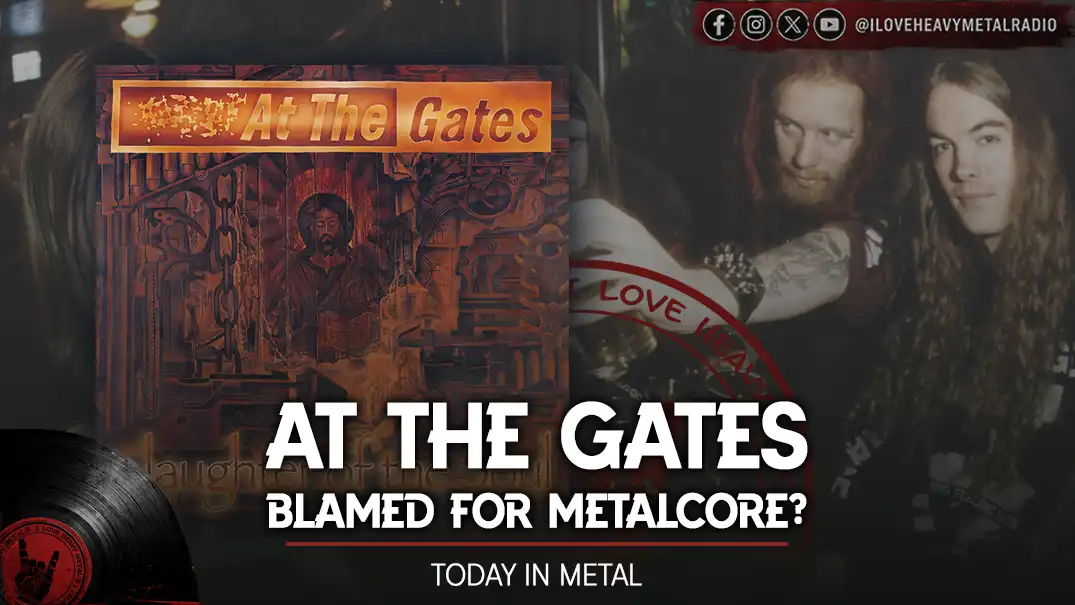
There aren’t many death metal albums that have influenced an entire generation of musicians. At the Gates “Slaughter of the Soul” is definitely one of them.
Released on November 14, 1995, the band’s fourth studio album became a landmark release in melodic death metal. Its sharp riffs, aggressive vocals, memorable melodies and straight-to-the-point songwriting helped shape the sound of countless bands that came after it.
But there’s something interesting about its legacy. For years, At the Gates have been connected to the rise of modern metalcore. And while many musicians have openly named the band as an influence, guitarist Anders Björler has a slightly different view of that connection.
So, did “Slaughter of the Soul” really create the blueprint for metalcore, or did the next generation take the album’s sound somewhere the band never intended?
An Album That Changed Everything
By 1995, At the Gates had already released three studio albums, but “Slaughter of the Soul” was something different.
The band went for a tighter, more direct sound. The songs were shorter, the riffs hit harder and the melodies were impossible to ignore. There was aggression everywhere, but the songwriting never got lost in unnecessary complexity.
Tracks like “Blinded by Fear”, “Slaughter of the Soul” and “Cold” showed exactly what the band could do when everything came together. Legendary King Diamond guitarist Andy LaRocque even dropped in to record the guest guitar solo on “Cold”.
Recorded at Studio Fredman in Gothenburg with producer Fredrik Nordström, the album helped bring the Gothenburg melodic death metal sound to a much wider audience.
It didn’t take long for other musicians to notice.
The Metalcore Connection
Fast-forward a few years and the influence of “Slaughter of the Soul” was becoming difficult to ignore.
Bands from the American metalcore and New Wave of American Heavy Metal scenes were bringing melodic guitar work and aggressive vocals into their own music.
Killswitch Engage, Shadows Fall, God Forbid and Trivium are among the bands commonly connected to the album’s legacy.
For many younger guitarists, At the Gates became an important reference point. That combination of melody and aggression was something they wanted to bring into their own music.
And honestly, it’s easy to understand why.
But being an influence doesn’t necessarily mean being responsible for everything that follows.
Anders Björler Had Something to Say
In a 2014 interview with Dead Rhetoric, guitarist Anders Björler was asked about the many bands that had taken inspiration from “Slaughter of the Soul”.
His answer was particularly interesting.
“We are also getting blamed for a lot of things that we didn’t really start” he explained.
Björler went further, suggesting that the American metal bands associated with the metalcore movement were influenced more by a combination of In Flames, Soilwork and Meshuggah.
He also described At the Gates own sound as much closer to Slayer influenced thrashy death metal.
And he made another interesting point about Killswitch Engage. Although he was happy and humbled that the band considered At the Gates an influence, he didn’t think the two bands actually sounded alike.
That’s an important distinction.
At the Gates weren’t rejecting the fact that younger bands had learned something from their music. Björler simply felt that the whole metalcore sound was much more complicated than people sometimes made it out to be.
Influence Doesn’t Mean Imitation
This is where the story gets interesting.
Music doesn’t develop in a straight line. One band takes inspiration from another, mixes it with completely different influences and eventually creates something new.
“Slaughter of the Soul” clearly helped shape the sound of modern metal, but it wasn’t the only piece of the puzzle.
In Flames, Soilwork, Meshuggah, Slayer and countless other bands were part of the wider musical picture.
Maybe At the Gates provided some of the ingredients, but the next generation cooked up something different.
And that’s not a bad thing. If anything, it’s what keeps metal moving forward.
Did “Slaughter of the Soul” Deserve the Blame?
More than three decades after its release, “Slaughter of the Soul” remains one of the most important melodic death metal albums of the 1990s.
Its influence is undeniable. But should At the Gates be held responsible for the sound of an entire generation of metalcore bands?
Or did listeners simply hear a few familiar ingredients and give the band more credit than they deserved?
One thing is certain: few albums have managed to leave such a massive mark on metal while still giving fans something to argue about years later.
Now it’s your turn:
Do you hear more At the Gates in modern metalcore, or do you agree with Anders Björler that the real recipe came from In Flames, Soilwork and Meshuggah?
And which band do you think carried the Gothenburg sound forward best?
Let us know in the comments!

 By

 By