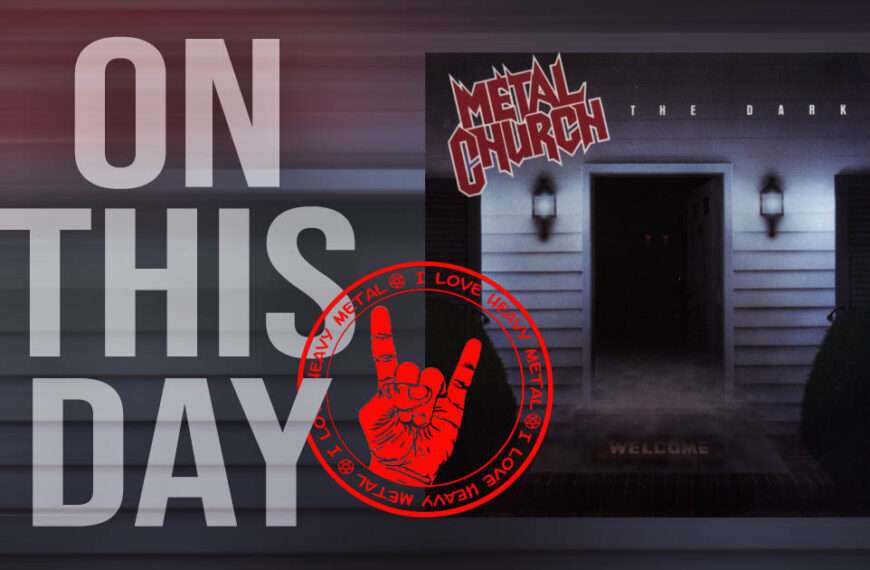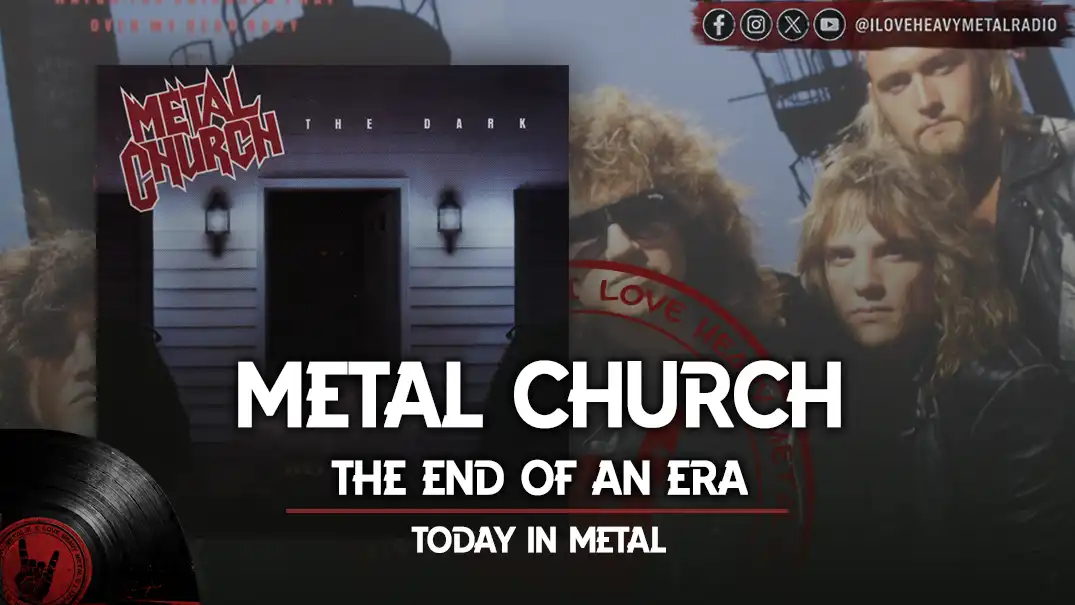

October 6th, 1986. Metal Church released “The Dark” an album filled with assassination, death, rituals, supernatural stories and the kind of dark atmosphere that made 80s heavy metal feel genuinely dangerous.
But there was something even darker surrounding the album.
“The Dark” was dedicated to Cliff Burton, the legendary Metallica bassist who had died just nine days before its release. And as if that wasn’t enough, the album would also become the final studio record featuring Metal Church classic lineup.
A great album but also the end of an era.
When Metal Church Went Darker
Released as the band second full-length album “The Dark” followed their highly regarded debut but pushed Metal Church into a slightly different direction.
The songs explored assassination, death, struggle, rituals and the supernatural. “Line of Death” for example, drew its lyrics from the Libyan hostilities in the Gulf of Sidra.
Then there’s the title track, which sounds like it belongs in a horror movie.
Its protagonist is trapped in an abandoned house, trying to survive the night while an evil demonic entity stalks him and attempts to drag him to hell.
Metal Church weren’t exactly writing bedtime stories.
The album darker atmosphere was also reflected in its cover: a shadowy, cloaked figure holding a guitar in front of a window. It captured that shift toward more sinister and aggressive imagery that was becoming increasingly common in mid-80s metal.
“Watch the Children Pray”
If there’s one song that showed another side of “The Dark” it was “Watch the Children Pray”.
The haunting track became Metal Church power ballad and received a music video that brought the band significant exposure, including heavy rotation on MTV’s Headbangers Ball.
For a band known for heavy riffs and speed, the song proved Metal Church could slow things down without losing their identity.
Not everyone was convinced.
Contemporary reviews were generally positive, but some critics felt the move to a major label had softened the band compared with their debut. Kerrang! considered the album impressive while arguing that its commercial direction had reduced some of the crushing weight of the first record.
Rock Hard was even harsher, suggesting the band creative peak may already have been their debut and criticizing David Wayne performance.
Still, “The Dark” has endured and today it is considered an essential release in the thrash metal genre.
A Tribute to Cliff Burton
The timing makes the album particularly difficult to separate from what happened around its release.
Cliff Burton died only nine days before “The Dark” arrived.
Metal Church and Metallica were part of the same growing West Coast metal scene, and the bands had been close friends and frequent touring partners. The album dedication to Burton gave “The Dark” an emotional weight that went far beyond its music.
And Metal Church soon found themselves on the road again, supporting Metallica and Anthrax on the Damage, Inc. Tour. They would also open shows for Megadeth, Anthrax and King Diamond.
1986 was moving fast.
Metal was getting bigger. The touring was getting bigger.
And Metal Church were right in the middle of it.
From Horror Movies to MTV
“The Dark” also found its way into the world of horror and film.
“Ton of Bricks” appeared in the 1987 Charlie Sheen movie No Man’s Land, while the track was also featured in the opening sequence of A Nightmare on Elm Street 3: Dream Warriors.
It’s a pretty perfect match.
Metal Church dark, aggressive sound sitting alongside 80s horror imagery? It makes sense.
The album even left an impression on another major thrash band. Anthrax guitarist Scott Ian has said that producer Mark Dodson work on “The Dark” inspired Anthrax to work with him on their fourth album State of Euphoria.
The End of the Classic Lineup
Perhaps the most bittersweet part of “The Dark” is knowing what came next.
This was the final album featuring the classic Metal Church lineup of David Wayne, Kurdt Vanderhoof, Kirk Arrington, Duke Erickson and Craig Wells.
Afterward, Wayne left the band and later formed Reverend, while Wells also departed. The classic lineup would not reunite in anything close to its original form until “Masterpeace” in 1999, with John Marshall replacing Wells.
So “The Dark” stands in a strange place in Metal Church history.
It was their second album, it helped establish their darker side, it brought them further into the mainstream metal world.
And it closed the door on the lineup that had built their early identity.
Nearly four decades later, the riffs still hit hard but knowing the story behind the record makes “The Dark” feel heavier than the title alone suggests.
Essential thrash classic or does the debut still destroy it?

 By
By
 By
By
 By
By